Air Freight vs Sea Freight in Pakistan: Which One Should You Actually Choose?
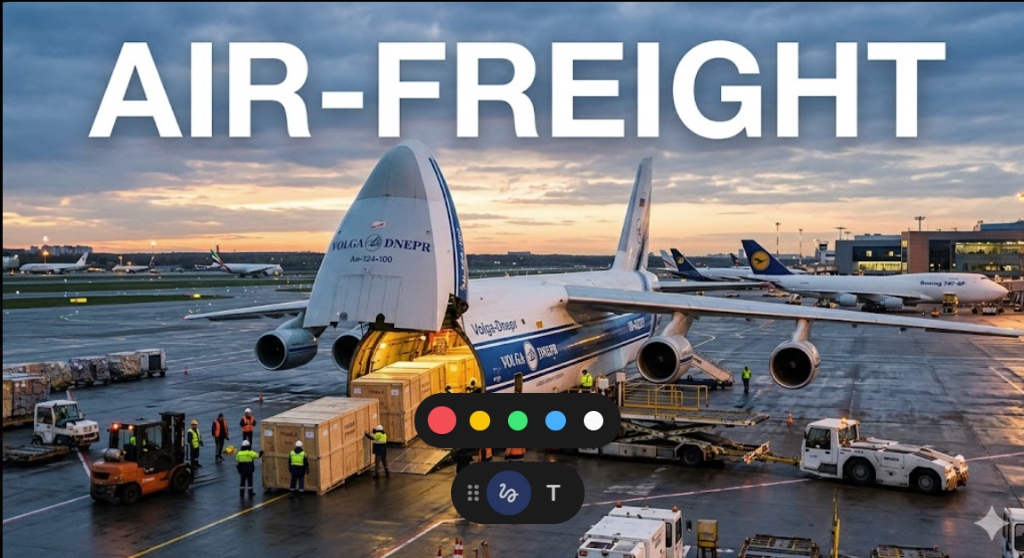
Every importer, exporter, and business owner in Pakistan eventually faces the same decision: ship by air, or ship by sea? It sounds like a simple question, but the right answer depends on more than just price. Speed, cargo type, budget, seasonal timing, and even how your goods are packed can all change which option actually makes sense for your shipment.
This guide compares air freight and sea freight in Pakistan across every factor that matters — cost, transit time, cargo suitability, and practical decision-making — so you can choose the right method instead of guessing or defaulting to whatever a single provider happens to push.
How Air Freight Works From Pakistan
Air freight moves cargo via commercial or dedicated cargo flights, departing from Pakistan's major international airports — primarily Jinnah International Airport in Karachi, Allama Iqbal International Airport in Lahore, and Islamabad International Airport. These airports connect Pakistani exporters and importers to global hubs across the Middle East, Europe, Asia, and beyond.
Air freight is priced per kilogram, using whichever is higher between the actual weight of your shipment and its volumetric (dimensional) weight. This pricing model rewards dense, compact cargo and penalizes bulky, lightweight packaging.
Advantages of Air Freight
- Speed — typically 1 to 8 days door-to-door, depending on route and service level
- Reliability — flight schedules are more predictable than vessel schedules
- Security — air cargo terminals have tighter handling and tracking controls
- Faster customs processing — air shipments often processed more quickly
- Lower inventory holding costs — goods arrive faster, reducing working capital in transit
Disadvantages of Air Freight
- Cost per kilogram is dramatically higher — often 5 to 15 times more expensive depending on route
- Volumetric weight rules can make bulky-but-light items disproportionately expensive
- Capacity limits — hard weight and size restrictions on cargo aircraft
- Restricted goods — many hazardous materials, large machinery, and oversized items cannot move by air
Learn more on our air freight services, air freight Islamabad, and air freight Rawalpindi pages.
How Sea Freight Works From Pakistan
Sea freight moves cargo via container ships through Pakistan's main seaports — primarily Karachi Port and Port Qasim — connecting to major shipping lanes serving the Gulf, Europe, Asia, and beyond. Unlike air freight, sea freight is priced based on volume (cubic meters) for smaller shipments, or as a flat rate per container for larger ones.
Advantages of Sea Freight
- Cost efficiency — dramatically cheaper per kilogram for medium to large shipments
- Capacity — a single vessel can carry thousands of containers
- No dimensional weight penalty — pricing based on actual space used
- Better suited to bulk and industrial goods — machinery, furniture, raw materials
- Scalability — ideal for businesses scaling up order volumes
Disadvantages of Sea Freight
- Transit time — typically 2 to 6 weeks depending on destination
- Port congestion risk — delays at origin or destination ports
- Higher documentation sensitivity — errors harder to correct mid-transit
- Not suitable for perishables or urgent cargo
Explore sea freight services and container shipping Pakistan.
Side-by-Side Comparison
| Factor | Air Freight | Sea Freight |
|---|---|---|
| Typical Transit Time | 1 to 8 days | 2 to 6+ weeks |
| Pricing Basis | Per kg (actual or volumetric weight) | Per CBM or flat container rate |
| Cost per kg | High | Low (often 5 to 10x cheaper) |
| Best for Bulk/Heavy Cargo | No | Yes |
| Best for Urgent/Perishable Goods | Yes | No |
| Documentation Flexibility | Higher | Lower |
| Capacity Limits | Restricted by aircraft size/weight | Very high |
| Risk of Damage | Lower | Slightly higher |
What Actually Determines the Right Choice for Your Shipment
1. Weight and Volume
Shipments under roughly 100–150 kg with low volumetric weight often see costs closer between the two methods, making air freight's speed advantage worth the smaller cost premium. Once a shipment exceeds this range — especially approaching a full pallet or more — sea freight's cost advantage becomes too large to ignore.
2. Nature of the Goods
Perishables such as fresh produce, seafood, and certain pharmaceuticals have no realistic alternative to air freight. Conversely, non-perishable bulk goods — machinery, furniture, construction materials, textiles, raw materials — rarely justify air freight's cost premium.
3. Urgency
If a shipment is genuinely time-critical — a replacement part holding up production, a sample needed for an imminent deal — air freight's premium is usually reasonable. If there is no real deadline pressure, sea freight almost always delivers better value.
4. Value Density
High-value, low-weight goods like electronics, jewelry, or specialized components tend to favor air freight. Low-value, heavy goods rarely make economic sense by air, since freight cost can quickly exceed the value of the goods themselves.
5. Budget Constraints
For businesses and individuals working with tighter budgets, sea freight is almost always the more sustainable long-term choice, particularly for recurring or bulk shipments where the cost difference compounds significantly over time.
Seasonal Considerations Specific to Pakistan
Shipping volumes and timelines from Pakistan fluctuate around several recurring periods worth planning around:
- Ramadan and Eid — increased cargo volumes can affect both air cargo space and port handling times
- Pre-Christmas and Black Friday season (October–December) — global demand rises sharply, pushing rates up
- Peak agricultural export seasons — air freight capacity can tighten during harvest periods for perishable exports
Booking early during these windows — for either shipping method — significantly reduces the risk of capacity shortages and last-minute rate increases.
Can You Combine Both Methods?
For businesses managing regular shipment volumes, a hybrid approach is often the most cost-effective long-term strategy. Use sea freight for the bulk of regular inventory while reserving air freight for urgent top-up orders, replacement parts, or time-sensitive samples. This captures sea freight's cost advantage for the majority of volume while retaining air freight's speed for exceptions.
Customs Clearance: Does It Differ Between Air and Sea?
The underlying customs clearance process in Pakistan — Goods Declaration filing, risk channel assignment, duty assessment, and release — applies to both air and sea shipments. However, in practice, air cargo tends to clear faster, partly because smaller shipment volumes are easier to process and partly because air cargo terminals are generally more digitized.
Read our full customs clearance process in Pakistan guide for step-by-step details on WeBOC, Green/Yellow/Red channels, and documentation requirements.
Cost Considerations Beyond the Headline Rate
Whichever method you choose, the quoted freight rate is rarely the full picture. Total cargo charges typically include fuel surcharges, terminal handling fees, customs clearance costs, and — for door-to-door service — inland transport at both ends. Always compare fully-loaded costs rather than headline figures when deciding between the two.
For UK-specific pricing context, see our cargo charges from Pakistan to UK guide.
A Practical Decision Framework
- Is the cargo perishable or extremely time-sensitive? If yes, air freight is effectively your only realistic option.
- Does the shipment exceed roughly 150–200 kg or a significant volume? If yes, sea freight's cost advantage is likely too large to ignore.
- Is the value-to-weight ratio high (electronics, high-value components)? If yes, air freight's speed often justifies the premium.
- Is there genuine, hard-deadline urgency? If yes, air freight; if not, default to sea freight.
- Is this a recurring, ongoing shipping need? If yes, consider a hybrid model — sea freight for regular volume, air freight reserved for exceptions.
Environmental Impact: A Factor More Businesses Are Considering
Sea freight is significantly less carbon-intensive per tonne of cargo moved than air freight, often by a factor of 40 to 50 times on a like-for-like basis. For businesses whose international buyers are beginning to ask about supply chain emissions — particularly those supplying European retail or corporate buyers — defaulting to sea freight wherever timelines allow is increasingly seen as both a cost and a compliance advantage.
Two Real-World Shipping Scenarios
Scenario 1 — Pharmaceutical import (Lahore): A Lahore-based pharmaceutical distributor needs to import 60 kg of temperature-sensitive medication components from Germany with a strict usability window. Air freight is the obvious choice — the cost premium is a small fraction of the shipment's total value, and the 4-to-5-day transit keeps the product within its viable shelf life.
Scenario 2 — Furniture export (Karachi): A Karachi-based furniture exporter is shipping a full container of finished wooden furniture to a retail buyer in the Gulf with a six-week lead time. Sea freight via FCL is the clear choice — air freight would cost many times more with no corresponding benefit.
Neither business made the wrong choice by picking different methods — each matched their shipping method to their actual constraints rather than defaulting to either option out of habit.
Why Work With a Provider That Offers Both
Because the right choice genuinely depends on the specifics of each shipment, working with a logistics partner that handles both air and sea freight — rather than one that only offers a single mode — means you get an honest recommendation based on your actual cargo, not a sales pitch toward whichever service the provider happens to specialize in.
Best International Movers manages both air and sea freight shipments to and from Pakistan, alongside freight forwarding and customs clearance, allowing businesses and individuals to get a single, comparative quote across both methods before committing.
Frequently Asked Questions
Is air freight or sea freight cheaper from Pakistan?
Sea freight is almost always cheaper per kilogram, often by a factor of 5 to 10 or more, particularly for shipments over 150 to 200 kg. Air freight only becomes cost-competitive for very small, light, or high-value shipments where speed offsets the premium.
How much faster is air freight than sea freight from Pakistan?
Air freight typically takes 1 to 8 days door-to-door, while sea freight takes 2 to 6 weeks or longer, depending on the destination and current route conditions.
Which is better for a small business shipping regularly from Pakistan?
Most small businesses benefit from a hybrid approach — using sea freight for regular, planned inventory shipments and reserving air freight for urgent or time-critical orders, balancing overall cost against occasional speed needs.
Does air freight clear customs faster than sea freight in Pakistan?
Generally yes. Air cargo tends to move through customs more quickly due to smaller shipment volumes and more digitized documentation handling, while sea freight shipments selected for physical inspection can take longer due to container access logistics at the port.
What types of goods should never be shipped by sea freight?
Perishable goods such as fresh produce, seafood, and time-sensitive pharmaceuticals should not be shipped by sea, since the multi-week transit time would compromise their usability or shelf life on arrival.
Can I switch from sea freight to air freight after my shipment has already been booked?
It depends on how far along the booking is. Before the cargo has been loaded or the container sealed, switching is often possible, though it usually means re-quoting at air freight rates and rebooking space. Once a sea shipment is in transit, switching modes is generally not practical.
Final Thoughts
There is no universally "better" option between air freight and sea freight — only the option that is better for your specific shipment, budget, and timeline. Bulky, non-urgent, cost-sensitive cargo almost always favors sea freight. Urgent, high-value, or perishable cargo almost always favors air freight. Businesses with recurring shipping needs often benefit most from using both strategically rather than committing to one exclusively.
The best way to avoid an expensive mistake is to get a side-by-side quote for both methods before booking, factoring in the full cost — not just the headline rate. Call 0300-9130211 or WhatsApp us for a free comparative quote today.
Need a shipping plan?
Get a free quotes from Best International Movers & Logistics — 0300-9130211 · info@bestintlmovers.com
Get Free Quote