Why Cargo Insurance Is the Most Important Thing You're Ignoring When Shipping from Pakistan
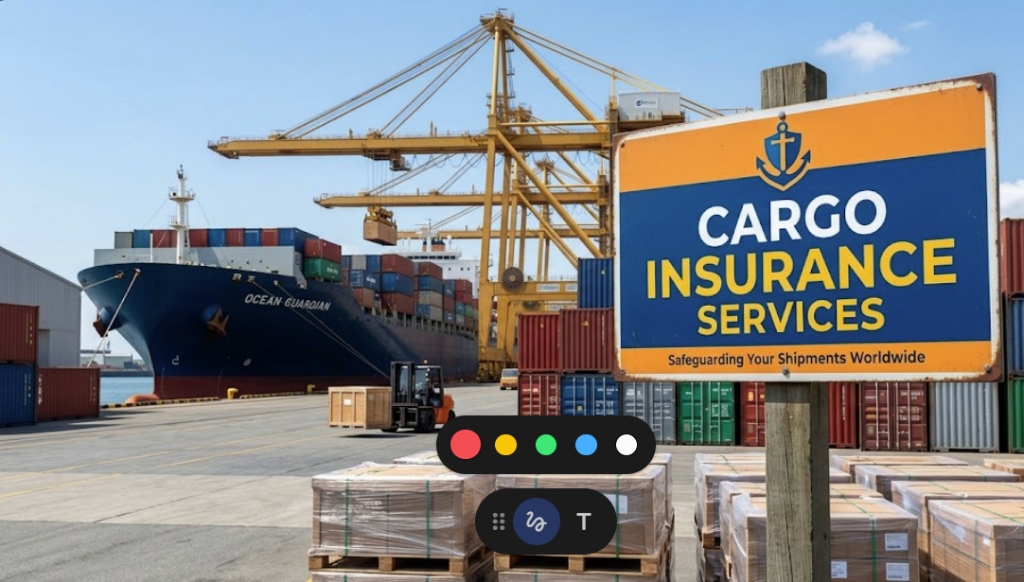
Picture this: You have spent months planning your move from Rawalpindi to Dubai. Your entire household — furniture collected over years, your children's belongings, your appliances, your irreplaceable personal items — is packed into a 20-foot container and loaded at Karachi Port. Three weeks later, you receive a call. Your container was water-damaged during a storm in the Arabian Sea. Clothes, electronics, wooden furniture — ruined.
You call the shipping line expecting full compensation. They tell you their liability is capped at USD 500 per package under the Hague-Visby Rules. Your goods were worth PKR 4,000,000. The shipping line owes you approximately USD 3,000.
This scenario plays out for Pakistani families and businesses every single year. And almost every time, the reason for the financial loss is the same — no cargo insurance.
If you are moving internationally from Pakistan, shipping commercial goods abroad, or even transporting household items between cities domestically, cargo insurance is not a luxury. It is the single most important financial protection in your entire logistics chain.
This guide covers everything you need to know.
The Fundamental Problem: Carrier Liability Is Almost Worthless
Before we explain what cargo insurance is, it is essential to understand what it replaces — and why carrier liability alone is dangerously insufficient.
Sea Freight Carriers
International sea freight is governed by the Hague-Visby Rules — an international maritime convention that limits a carrier's liability to SDR 666.67 per package or SDR 2 per kilogram, whichever is higher. In practical terms, this means a shipping line's maximum liability for a standard container of household goods is often less than USD 5,000 — regardless of the actual value of the contents.
Air Freight Carriers
The Montreal Convention governs international air freight and limits airline liability to 19 SDR per kilogram. For a 500 kg air freight shipment worth PKR 2,000,000, the airline owes you approximately USD 13,000 — a fraction of the actual value.
Road Freight in Pakistan
Domestic road freight carriers in Pakistan operate under consignment note terms that typically cap liability at a fixed nominal amount per consignment. In practice, recovering meaningful compensation from a road carrier after an accident is extremely difficult.
The conclusion is unavoidable: Carrier liability exists to protect carriers, not cargo owners. Cargo insurance exists to protect you.
What Is Cargo Insurance? A Clear Definition
Cargo insurance — also called transit insurance, freight insurance, or marine cargo insurance — is a financial protection policy that compensates the cargo owner for the actual declared value of goods that are lost, stolen, or damaged during transit.
Unlike carrier liability, which is capped by international convention at a fraction of cargo value, cargo insurance pays out based on what your goods are actually worth — the full invoice value or replacement value you declare when taking out the policy.
It covers goods moving by sea, air, road, or any combination of these — from the moment they leave the origin premises until they are delivered to the final destination.
Types of Cargo Insurance — Which One Do You Need?
Not all cargo insurance policies are the same. Understanding the three main types helps you choose the right level of protection for your specific shipment.
1. All-Risk Coverage — The Gold Standard
All-Risk cargo insurance is the most comprehensive policy available. It covers your goods against all causes of physical loss or damage during transit, except for specific named exclusions clearly stated in the policy.
What All-Risk covers:
- Accidental physical damage during handling, loading, and unloading
- Water damage — including sea water ingress into containers
- Fire and explosion at any point during transit
- Theft, pilferage, and non-delivery
- Total loss due to vessel sinking, grounding, or collision
- Aircraft accidents and emergency landings
- Road accidents, vehicle overturning, and collisions
- Natural disasters occurring during transit — earthquakes, floods, storms
What All-Risk does NOT cover:
- Inherent vice — natural deterioration or self-damage of goods
- Deliberate damage caused by the cargo owner
- Improper or insufficient packing by the shipper
- War, strikes, and civil unrest (available as an optional add-on rider)
Our recommendation: All-Risk is the right choice for household goods, electronics, furniture, fragile items, high-value commercial goods, and any shipment where the contents have significant financial or sentimental value. If you are planning an international move from Pakistan, All-Risk coverage should be considered non-negotiable.
2. Total Loss Only (TLO) — Basic Protection at Lower Cost
TLO insurance pays out only when your entire shipment is completely and irretrievably lost — for example, if the vessel sinks, the aircraft crashes, or the truck is completely destroyed and no goods are recoverable.
Partial damage — a broken television, water-damaged furniture, scratched items — is not covered under TLO.
When TLO makes sense: Low-value bulk commodities, construction materials, and cargo where the individual item value is low but a total loss would still be financially significant.
When TLO does not make sense: Household goods, electronics, fragile cargo, and any shipment where partial damage is likely or financially impactful.
3. Named Perils Insurance — Middle Ground
Named Perils policies cover your cargo against a specific list of risks stated in the policy — typically fire, sinking, stranding, collision, and theft. Any risk not on the named list is not covered.
This option sits between TLO and All-Risk in terms of both coverage and cost. It suits standard commercial cargo on well-established, lower-risk routes where the shipper is confident about the most likely risks.
How Cargo Insurance Premiums Are Calculated in Pakistan
One of the most common questions is: how much does cargo insurance actually cost?
The premium is calculated as a percentage of your declared cargo value, and the rate varies based on several factors:
| Factor | Effect on Premium Rate |
|---|---|
| Type of coverage chosen | All-Risk > Named Perils > TLO |
| Nature of goods | Electronics, fragile items = higher rate |
| Shipping route | Long-haul, high-risk routes = higher rate |
| Mode of transport | Sea, air, road = different base rates |
| Quality of packing | Professional packing = lower rate |
| Claims history of shipper | Clean record = lower rate |
Typical premium ranges in Pakistan (2026):
- All-Risk sea freight (household goods): 0.3% – 0.8% of cargo value
- All-Risk air freight: 0.2% – 0.5% of cargo value
- All-Risk domestic road freight: 0.1% – 0.3% of cargo value
- Named Perils coverage: 0.1% – 0.3% of cargo value
A Real-World Example
A family moving from Islamabad to London ships a 20-foot container with household goods declared at PKR 5,000,000.
- All-Risk premium at 0.5% = PKR 25,000
- This protects PKR 5,000,000 of goods for PKR 25,000
- That is 0.5% of the total cargo value — for complete protection throughout a 25-day sea voyage
Put another way: for less than the cost of a single piece of furniture, you protect everything in the container. The decision, when framed this way, becomes straightforward.
What the Claims Process Looks Like — Step by Step
Many people avoid cargo insurance not because of the cost, but because they assume making a claim is complicated and unlikely to succeed. In practice, a well-documented claim with a professional moving company is a straightforward process.
Pre-shipment inventory and photos
Before any goods are packed, our team creates a complete photographic and written inventory of every item. This is your baseline documentation — proof of the condition and existence of every piece before it left your hands.
Damage is discovered at delivery
When goods arrive at the destination and damage is found, you note it on the delivery receipt immediately. Never sign a clean delivery note if damage is visible.
Notify within the policy timeframe
Most cargo insurance policies require notification of loss or damage within 3 to 7 days of delivery. Our team files this notification on your behalf, ensuring you do not miss the window.
Surveyor assessment
The insurer appoints a cargo surveyor to inspect and assess the damage. Our pre-shipment photos and inventory are submitted as supporting documentation.
Claim settlement
Once the surveyor's report is accepted, the insurer settles the claim based on the declared value. You receive compensation for the actual value of the damaged or lost goods.
The key to a successful claim is documentation — and professional packing with a complete inventory makes this straightforward.
The 5 Biggest Cargo Insurance Mistakes Pakistani Shippers Make
Mistake 1: Assuming the shipping line will cover everything
As outlined above, carrier liability is capped at a fraction of cargo value. This assumption has cost Pakistani families and businesses millions of rupees in unrecovered losses.
Mistake 2: Under-declaring cargo value to save on premium
Declaring PKR 1,000,000 for goods worth PKR 3,000,000 saves a few thousand rupees in premium — but leaves a PKR 2,000,000 gap in coverage. Always declare the full replacement value.
Mistake 3: Packing goods yourself without professional support
Insurers can — and do — reject claims if goods were improperly packed by the shipper. Professional packing by a qualified moving company both protects your goods and protects your insurance coverage. Our <Link to="/services/professional-packing" className="text-gold hover:underline">professional packing service</Link> uses export-grade materials that meet insurance underwriter standards.
Mistake 4: Not photographing goods before packing
Without pre-shipment documentation, it is very difficult to prove the pre-existing condition of goods when making a damage claim. A photographic inventory takes one hour and saves enormous complications later.
Mistake 5: Missing the claim notification deadline
Cargo insurance policies have strict timeframes for notifying the insurer of damage or loss. Missing this window — even by one or two days — can invalidate your claim entirely. Working with a logistics provider who manages this on your behalf eliminates this risk.
Cargo Insurance for Domestic Shipments Within Pakistan
Cargo insurance is not only for international shipping. Domestic shipments within Pakistan — furniture moved between cities, commercial goods transported by truck, equipment relocated between facilities — face real risks too.
Road accidents in Pakistan are a significant cause of cargo damage. Vehicle overturning, collisions, and fire are not hypothetical risks on Pakistan's highways. For any high-value domestic consignment, transit insurance is a worthwhile investment.
For all domestic movements through our goods transportation network across Pakistan, we recommend All-Risk coverage on consignments exceeding PKR 200,000 in value.
Why Professional Packing and Insurance Go Together
There is a direct relationship between packing quality and insurance coverage. Insurers assess packing standards when evaluating claims — and policies can be voided or claims reduced if goods were not packed to a reasonable standard.
When you book a full packing service with Best International Movers & Logistics:
- Every item is packed using export-grade materials
- Fragile items receive double-layer protective wrapping
- All boxes are labelled and recorded in a written inventory
- Photographs are taken at every stage of packing
- Packing meets the standards required by marine cargo insurance underwriters
This means your goods are not only better protected physically — your insurance coverage is also on a stronger footing if you ever need to make a claim.
Frequently Asked Questions — Cargo Insurance Pakistan
Is cargo insurance mandatory for shipping from Pakistan?
Does cargo insurance cover my goods during storage at the port or warehouse?
What if my goods are damaged during the packing process?
Can I get cargo insurance for a single domestic shipment within Pakistan?
How quickly is a cargo insurance claim paid out?
What documents do I need to make a cargo insurance claim?
Protect Your Shipment — Get Cargo Insurance with Your Move
Whether you are moving your family internationally, shipping commercial goods to export markets, or transporting household items between cities in Pakistan — cargo insurance gives you the financial security to ship with confidence.
At Best International Movers & Logistics, cargo insurance is available as a seamless part of every shipment we handle. One team, one call, complete protection.
More Articles & Guides
Explore our comprehensive collection of moving and shipping guides to make your relocation journey smoother.
International Moving Services from Pakistan
Complete door-to-door relocation services across 100+ countries with expert handling.
Professional Packing Service Guide
Premium packing materials and white-glove service for your most precious belongings.
Goods Transportation Across Pakistan
Reliable road freight services connecting all major cities with GPS tracking.
Air vs Sea Freight: Complete Comparison
Detailed comparison of air and sea freight options for international shipping from Pakistan.
How to Choose Packers and Movers
Complete guide to selecting the right moving company for your relocation needs.
Moving Cost Calculator Pakistan
Calculate your moving costs with our comprehensive guide and pricing insights.
Get Your Free Quote
Fill out the form and our team will get back to you within 24 hours.
Our Offices
Rawalpindi | Islamabad | Lahore | Karachi | Peshawar
Call / WhatsApp
0300-9130211
Quote & Email
bestinternationalmoverslogisti@gmail.com info@bestintlmovers.com
Hours
Monday to Saturday 8:00 AM — 8:00 PM Sunday: Emergency Only