Car Shipping Pakistan to UK and UK to Pakistan: The Complete 2026 Guide
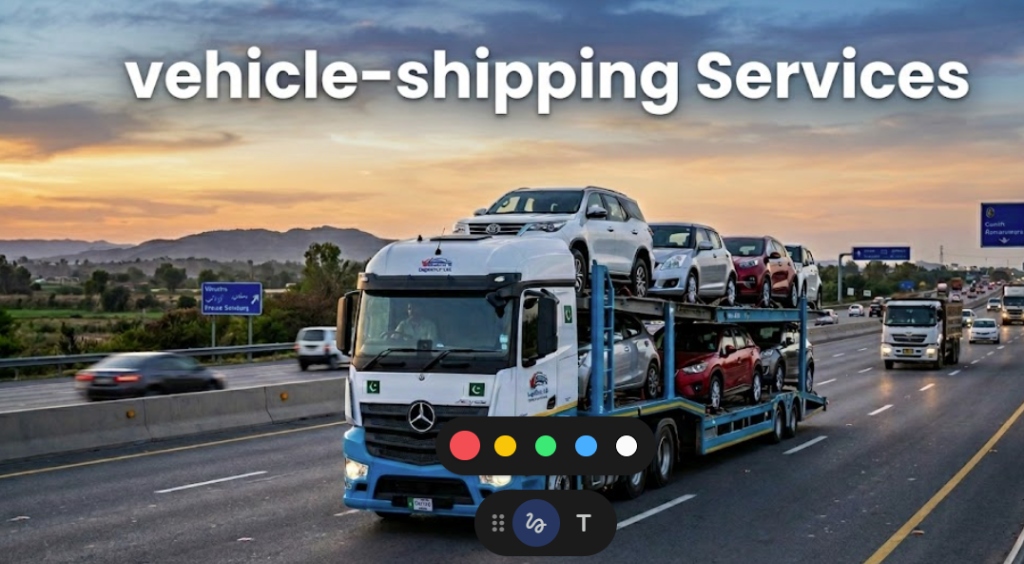
Whether you are an overseas Pakistani in the UK shipping your car back home, a UK resident relocating to Pakistan, or someone buying a right-hand drive vehicle in the UK for import, car shipping between Pakistan and the UK in 2026 is a more regulated process than it has ever been. The Pakistani government has overhauled its vehicle import schemes, eliminated the Personal Baggage scheme, introduced a 40% additional duty on used car imports, and set stricter age limits — all changes that came into force from September 2025 onward, with further policy shifts effective July 2026.
Getting this wrong is expensive. A car sitting at Karachi Port accumulates demurrage charges by the day. A vehicle rejected at customs because of an incorrect scheme, wrong documentation, or an exceeded age limit cannot simply be returned. This guide covers both directions of the route — UK to Pakistan and Pakistan to UK — in full practical detail, so you can plan your shipment with accurate information rather than outdated assumptions.
What Has Changed for Car Imports to Pakistan in 2026
Before diving into logistics, every prospective importer needs to understand the regulatory landscape that is in effect right now. These are not minor updates — they fundamentally change who can import, under what conditions, and at what cost.
Personal Baggage Scheme: Eliminated
The Personal Baggage Scheme, which previously allowed overseas Pakistanis returning home to bring a vehicle within 60 days of arrival under a simplified process, has been discontinued. As of 2026, only two schemes remain for personal-use vehicle imports by overseas Pakistanis:
- Transfer of Residence (ToR) Scheme — for Pakistanis who have lived abroad for at least 700 days over the past three years and are genuinely relocating back to Pakistan. The vehicle must have been registered and used in the country of residence — a vehicle purchased in the UK specifically for import qualifies, but it cannot be sourced from a third country.
- Gift Scheme — allows an overseas Pakistani to gift a vehicle to a blood relative resident in Pakistan, subject to eligibility conditions. Recipients who have received a gifted or imported vehicle in the past two years are ineligible.
Both schemes now carry a strict one-year resale ban after import. Anyone who sells the vehicle within this period faces serious customs penalties.
Age Limit: Three Years
Under both the Transfer of Residence and Gift schemes, the vehicle must not be older than three years from its manufacturing date at the time of import. From July 2026, the age restriction framework is being revised alongside updated safety and emissions compliance requirements. Until those standards are formally gazetted and implemented, confirm the current position with a licensed customs clearing agent before purchasing the vehicle.
Additional Duty on Used Cars
A 40% additional customs duty applies to all used car imports effective September 2025. This reduces by 10 percentage points each year through 2029, when it will be fully removed. For 2026 imports, the additional duty is in the range of 30 to 40% depending on when in the year the import is processed — on top of the standard duty structure. Importers who budgeted based on pre-2025 rates will find this a significant unexpected cost.
EV and Hybrid Concessions
Electric vehicles imported as Completely Built-Up Units (CBUs) attract only 1% customs duty. Hybrid Electric Vehicles (HEVs) with engine capacity up to 1800cc receive a 50% reduction in applicable duty, and those between 1800cc and 2500cc receive a 25% reduction. These concessions make EV and hybrid imports significantly more cost-competitive than petrol or diesel equivalents on the duty side.
Shipping Methods: RoRo vs Container
On the physical logistics side, car shipping between the UK and Pakistan uses two primary methods, each with distinct cost profiles and suitability criteria.
RoRo (Roll-On / Roll-Off)
RoRo shipping is the most economical method for vehicles that are fully operational. Your car is driven directly onto a specialized vehicle carrier vessel, secured to the deck, transported, and driven off at the destination port. The vehicle is not enclosed in a container — it travels in an open or covered vehicle deck alongside other cars.
RoRo is right for you when:
- Your vehicle is fully operational and can be driven onto and off the ship
- You want the lowest possible freight cost
- Your destination port has a dedicated RoRo terminal (Karachi Port does)
- You are not planning to pack personal effects inside the vehicle
- The vehicle is not electric (most RoRo operators do not accept EVs due to battery safety regulations)
RoRo limitations: the vehicle is exposed to salt air and sea conditions during transit; personal belongings cannot typically be loaded inside; non-running vehicles are not accepted; and electric vehicles are generally excluded.
Container Shipping (Shared and Dedicated)
Container shipping places your vehicle inside a steel shipping container — either shared with other vehicles heading to the same destination, or in a dedicated container for exclusive use. Once sealed, the container is not reopened until the destination port.
- Shared container — the most popular middle-ground option: multiple vehicles share the container space, professionally loaded and secured, offering protection at a mid-range price point.
- Dedicated container — your vehicle travels alone in a 20ft or 40ft private container. Ideal for high-value, classic, or non-running vehicles. Personal effects can often be packed alongside the vehicle — subject to destination customs rules — making it a practical choice for full relocation shipments.
Container shipping is right for you when the vehicle is non-operational or recently restored, when you are shipping a high-value or luxury vehicle, when you need to co-ship personal effects, or when the vehicle is electric.
Side-by-Side Method Comparison
| Factor | RoRo | Shared Container | Dedicated Container |
|---|---|---|---|
| Cost | Lowest | Mid-range | Highest |
| Protection | Open/covered deck | Sealed container | Sealed container (private) |
| Personal effects | Not permitted | Limited | Yes (subject to customs) |
| EV/non-running | Not accepted | Accepted | Accepted |
| Classic/luxury vehicles | Lower protection | Good | Best |
| Availability from UK | Regular weekly sailings | Available | Available |
UK to Pakistan: Step-by-Step Shipping Process
Step 1: Confirm Your Eligibility and Scheme
Before purchasing a vehicle or booking shipping, confirm which scheme you qualify for. The Transfer of Residence Scheme requires 700 days abroad in the past three years, verified by passport stamps and visa records. The Gift Scheme requires the recipient to be a blood relative resident in Pakistan who has not received an imported vehicle in the past two years. Students receiving remittances from Pakistan and non-earning dependents of overseas Pakistanis are not eligible for either scheme.
Step 2: Select and Prepare the Vehicle
Only right-hand drive (RHD) vehicles are permitted for import to Pakistan — this aligns naturally with UK vehicles, which are all right-hand drive. The vehicle must be accident-free and unmodified. Engine capacity determines the applicable duty slab, and the vehicle type (petrol/diesel, hybrid, or electric) determines which duty concession tier applies.
Before handing the vehicle to a shipping company: ensure the fuel tank contains no more than a quarter tank, the battery is in good working condition, and all personal items are removed from the vehicle for RoRo shipments.
Step 3: Arrange Export Documentation in the UK
The export documentation required from the UK side includes:
- V5C (Vehicle Registration Certificate) or equivalent proof of ownership
- Export invoice or purchase receipt confirming the vehicle value
- Proof of your identity and overseas residency (NICOP, passport, visa records)
- Insurance certificate for transit
Your shipping company or freight forwarder will prepare the Export Declaration through UK customs systems. Ensure the declared value matches your purchase documents exactly.
Step 4: Shipping From UK Ports to Karachi
The primary UK departure ports for Pakistan-bound vehicle shipments are Tilbury (London), Southampton, and occasionally Bristol. Regular weekly sailings operate to Karachi Port and Port Qasim. Sea freight transit from the UK to Pakistan typically takes around 6 to 8 weeks depending on port schedules and the routing. Some routes involve transshipment at intermediate ports such as Jebel Ali (UAE), which can add time to the overall transit window.
Step 5: Pakistan Customs Clearance at Karachi
Upon arrival in Pakistan, customs clearance is handled through the WeBOC system and increasingly through the Pakistan Single Window (PSW). The importer or their licensed clearing agent files the Import Declaration with the following documents:
- Bill of Lading or shipping company delivery order
- Commercial invoice and packing list
- Form E (or equivalent foreign exchange declaration)
- NICOP and passport of the importer
- Proof of overseas residence (visa, work permit, or residency documentation covering the required period)
- Vehicle inspection report or condition certificate
Pakistan Customs assigns the shipment a risk channel. Vehicles are commonly inspected physically, making Red Channel clearance the norm rather than the exception. The inspection verifies that the vehicle matches the declared description, age, and condition. See our customs clearance process in Pakistan guide for full detail.
Step 6: Duty Assessment and Payment
Duty is calculated on the CIF (Cost, Insurance, Freight) value of the vehicle, with the applicable slab determined by engine capacity. The structure includes:
- Basic Customs Duty — varies by engine capacity slab, typically ranging from moderate rates for smaller engines to significantly higher rates for larger-displacement vehicles
- Additional Customs Duty (ACD) — approximately 7% of the basic customs duty
- Income Tax (Withholding Tax) — approximately 5% on the CIF plus customs duty value
- Used Car Additional Duty — approximately 30% for vehicles imported through 2026 under the phased reduction schedule (was 40% at introduction in September 2025)
- EV/Hybrid Concessions — 1% duty for EVs; 50% or 25% reduction for HEVs depending on engine size
Step 7: Vehicle Registration in Pakistan
After duty payment and customs release, the vehicle must be registered with the relevant provincial Excise and Taxation Department. This requires the customs release order, the import documents, and payment of provincial registration fees. The vehicle will be issued Pakistani number plates and a registration book. Until registration is complete, the vehicle cannot legally be driven on public roads.
Pakistan to UK: Exporting Your Car
The Pakistan-to-UK direction of this route operates under a different regulatory framework on the UK side.
UK Import Requirements for Vehicles
Vehicles arriving in the UK from Pakistan are subject to UK customs clearance, HMRC duty assessment, and UK vehicle compliance requirements. Most vehicles manufactured in or imported from South Asian markets are not originally built to UK or European safety and emissions standards, which has implications for registration.
The NOVA (Notification of Vehicle Arrivals) process requires all vehicles arriving in the UK to be declared to HMRC before they can be registered for road use. Failure to complete this prevents registration. UK import duty and VAT at 20% apply on the duty-inclusive value. Vehicles that do not meet UK type approval requirements will require Individual Vehicle Approval (IVA) testing before registration, which can be costly.
Transit Times: UK to Pakistan and Pakistan to UK
| Route | Method | Typical Transit Time |
|---|---|---|
| UK (Tilbury/Southampton) → Karachi | RoRo | 6 to 8 weeks |
| UK (Tilbury/Southampton) → Karachi | Container | 6 to 8 weeks |
| Karachi → UK (Tilbury/Felixstowe) | Container | 6 to 8 weeks |
Cost Factors: What Drives Your Total Car Shipping Bill
The total cost of shipping a car between Pakistan and the UK is made up of multiple components, and the freight rate is only one of them:
- Ocean freight — the base RoRo or container rate from port to port
- Origin port charges — terminal handling at the UK departure port
- Destination port charges — terminal handling at Karachi Port or Port Qasim
- Inland transport — door-to-port pickup in the UK and/or port-to-destination delivery in Pakistan
- Export documentation — UK export declaration and shipping paperwork
- Pakistan customs clearance fees — licensed clearing agent fees at Karachi
- Pakistan import duty and taxes — the largest single variable, calculated on CIF value by engine capacity slab
- Vehicle insurance in transit — optional but strongly recommended for high-value or non-running vehicles
- Pakistan vehicle registration — provincial Excise and Taxation fees post-clearance
Pakistan import duty is typically the largest cost component by far — often exceeding the freight cost several times over for mid-to-large engine capacity vehicles. Anyone budgeting for a car import who has not obtained a duty estimate from a licensed clearing agent is almost certainly working with an incomplete cost picture.
Common Mistakes That Delay or Increase the Cost of Car Shipping
- Not confirming scheme eligibility before purchasing the vehicle — buying a car and then discovering you do not qualify for the Transfer of Residence or Gift scheme leaves you with a vehicle you cannot legally import under a personal scheme
- Incorrect declared value on export documents — mismatches between the export invoice and the declared CIF value trigger customs queries that delay release
- Exceeding the three-year age limit — a vehicle older than three years from manufacturing date will not be accepted under current personal schemes
- Not accounting for the additional duty on used cars — many importers are still budgeting based on pre-September 2025 rates and are surprised by the additional duty on arrival
- Packing personal items in a RoRo shipment — most carriers prohibit this, and items found inside a vehicle during RoRo transit can be confiscated
- Not filing NOVA on arrival in the UK — vehicles arriving from Pakistan that have not been NOVA-declared cannot be registered for road use
Why Working With a Specialist Matters
Car shipping between Pakistan and the UK involves compliance on multiple regulatory systems simultaneously. Customs clearance at Karachi requires understanding scheme eligibility, HS code classification for vehicles, duty slab calculations, and WeBOC/PSW filing — all at the same time as coordinating the UK-side export documentation. Best International Movers specializes in vehicle shipping on the Pakistan-UK corridor, covering RoRo and container options in both directions, export documentation in the UK, Pakistan customs clearance and duty payment coordination at Karachi Port, and vehicle registration support. Combined with our freight forwarding expertise, we manage the full journey from collection point to registration-ready delivery in Pakistan.
Explore our vehicle shipping service, Pakistan to UK movers, and sea freight Pakistan to UK pages for route-specific support and quotes.
Frequently Asked Questions
Can I still import a car to Pakistan under the Personal Baggage Scheme in 2026?
No. The Personal Baggage Scheme has been discontinued. Only the Transfer of Residence Scheme and the Gift Scheme are currently available for personal vehicle imports by overseas Pakistanis.
What is the age limit for importing a car to Pakistan from the UK?
Under both the Transfer of Residence and Gift schemes, the vehicle must not be older than three years from its manufacturing date at the time of import. From July 2026, this limit is being revised alongside new safety and emissions compliance requirements — confirm the current position with a licensed clearing agent before purchase.
Is RoRo or container shipping better for sending a car from the UK to Pakistan?
RoRo is cheaper and well-suited to operational petrol or diesel vehicles where maximum cost savings are the priority. Container shipping offers more protection, allows personal effects to be co-shipped in dedicated containers, and is the only viable option for non-running or electric vehicles.
How long does it take to ship a car from the UK to Pakistan?
Typical transit time is 6 to 8 weeks, depending on the shipping method, sailing schedule, and routing. Disruptions affecting the Red Sea corridor are currently adding 10 to 14 additional days on some sailings.
How is Pakistan car import duty calculated?
Duty is calculated on the CIF value of the vehicle and depends on engine capacity, vehicle age (with depreciation allowance), fuel type (standard, hybrid, or electric), and which import scheme applies. Used car imports since September 2025 carry an additional duty that reduces by 10% annually through 2029.
Can electric vehicles be shipped via RoRo from the UK to Pakistan?
Most RoRo operators do not accept electric vehicles due to battery fire safety regulations during sea transit. EVs should be shipped in containers. Notably, EVs attract only 1% customs duty on import to Pakistan, making them significantly more cost-effective than petrol or diesel equivalents on the duty side.
What happens if my car is rejected by Pakistan customs?
A vehicle that fails to meet import requirements — wrong age, ineligible importer, wrong scheme, or documentation errors — can be detained at the port subject to substantial storage charges, and may ultimately need to be re-exported. Pre-shipment eligibility verification is essential, not optional.
Final Thoughts
Car shipping between Pakistan and the UK in 2026 rewards careful preparation and punishes shortcuts. The elimination of the Personal Baggage Scheme, the phased additional duty on used imports, the three-year age restriction, and the one-year resale ban have collectively made this a process where knowing the rules before you commit is the only way to protect your investment. Whether you are shipping from the UK to Pakistan or in the opposite direction, getting accurate duty estimates, confirming your scheme eligibility, and working with a logistics partner experienced in both the UK export and Pakistan customs clearance sides of the journey is the single most important step you can take before any vehicle leaves either country.
Get a free quote: call 0300-9130211 or WhatsApp us today.
Need a shipping plan?
Get a free quotes from Best International Movers & Logistics — 0300-9130211 · info@bestintlmovers.com
Get Free Quote