Cargo Charges from Pakistan to UK: The Complete 2026 Pricing Guide
Sending cargo from Pakistan to the UK seems simple until you actually try to get a straight answer on cost. Ask five different cargo companies and you will likely get five different quotes, with no clear explanation of what is actually driving the price. Is it the weight? The volume? The destination city? Customs on the UK side?
This guide breaks down exactly how cargo charges from Pakistan to the UK are calculated in 2026, what is currently driving rates up, and how to avoid paying more than you should — whether you are shipping a few boxes of personal items or a full commercial container.
Why Cargo Charges From Pakistan to UK Vary So Much
Unlike a fixed courier rate, cargo pricing on the Pakistan-to-UK route is built from several independent variables stacked together. Two people shipping what looks like "the same amount of stuff" can end up with very different bills because of differences in:
- Shipping method (air freight vs. sea freight)
- Actual weight versus volumetric (dimensional) weight
- Origin city in Pakistan and destination city in the UK
- Whether the service is port-to-port or door-to-door
- Current fuel surcharges and route conditions
- Customs clearance and duty handling on both ends
- Insurance and declared value of goods
Understanding each of these factors individually is the only way to compare quotes meaningfully — otherwise you are just comparing numbers without knowing what is actually included.
Air Freight vs. Sea Freight: The Core Decision
The single biggest factor affecting your cargo charges from Pakistan to the UK is whether you ship by air or by sea. These two options sit at opposite ends of the cost-and-speed spectrum.
Air Freight
Air freight from Pakistan to the UK is priced per kilogram, with rates typically calculated using whichever is higher: actual weight or volumetric weight (length × width × height, divided by a standard divisor). This matters enormously for bulky-but-light items like clothing, bedding, or packed boxes of mixed household goods, where volumetric weight often exceeds actual weight and pushes the price up.
Air freight is the right choice when:
- You need delivery within roughly a week
- Your shipment is relatively light or small
- The goods are high-value, urgent, or time-sensitive
- You are sending documents, samples, or business-critical items
Sea Freight (FCL and LCL)
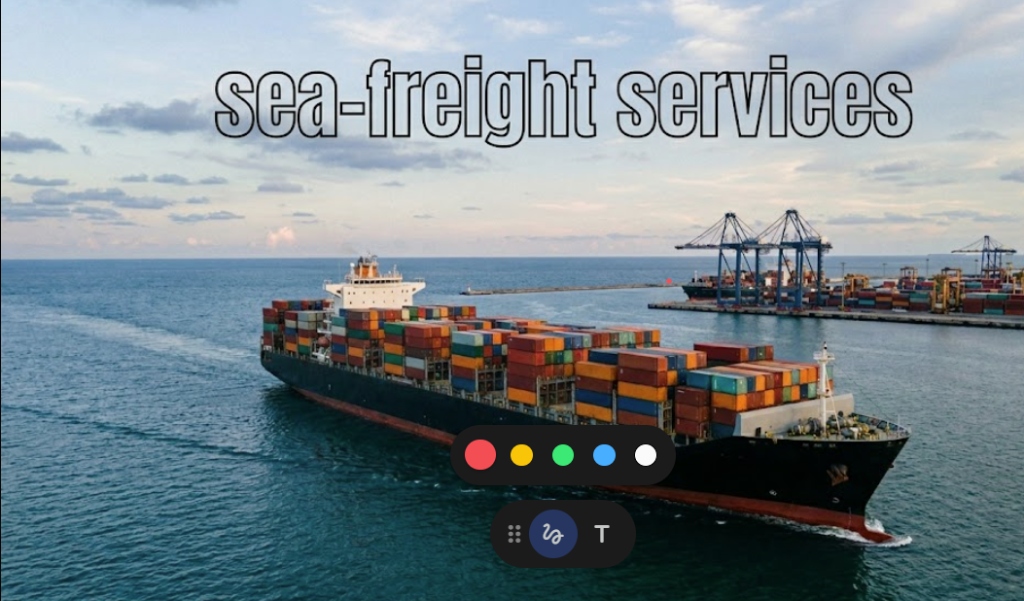
Sea freight is priced very differently — usually per cubic meter (CBM) for smaller shipments, or as a flat container rate for larger ones. This makes it dramatically more cost-effective for heavy or bulky cargo, even though it takes significantly longer to arrive.
Two main sea freight options exist:
- FCL (Full Container Load) — You book and pay for an entire container (typically 20ft or 40ft), regardless of whether you fill it completely. This is the most economical option once your shipment volume justifies a full container.
- LCL (Less than Container Load) — Your cargo shares container space with other shippers' goods, and you pay only for the volume you use. This is ideal for smaller commercial or personal shipments that do not justify a full container.
Sea freight is the right choice when:
- Cost matters more than speed
- You are shipping large volumes, furniture, or commercial inventory
- Your shipment can tolerate a multi-week transit window
Compare both modes in our air vs sea freight Pakistan guide and explore air freight and sea freight services.
Current Transit Times: What to Realistically Expect
As of 2026, typical transit times on the Pakistan-to-UK route look like this:
| Shipping Method | Typical Transit Time |
|---|---|
| Air Freight (standard) | 5 to 8 days |
| Air Freight (express) | 2 to 4 days |
| Sea Freight (FCL/LCL) | 30 to 45+ days |
What's Actually Driving Cargo Rates Up in 2026
If you have shipped cargo from Pakistan to the UK before and noticed your quote is higher this year, you are not imagining it. Several factors are currently pushing rates upward across the route:
- Rerouted vessel schedules around the Red Sea disruption have increased fuel consumption and voyage length, and carriers are passing this cost on through base rate increases and surcharges.
- War Risk Surcharges (WRS) are now applied by most major carriers on affected lanes, adding a fixed cost on top of the base freight rate.
- Container availability and equipment imbalances at Pakistani ports can create short-term rate spikes, particularly during peak shipping seasons.
- Fuel surcharges (BAF) fluctuate based on global oil prices and are typically billed separately from the headline freight rate.
- Port and terminal handling charges (THC) at both the origin and destination ports add to the total, and these vary by port and by carrier.
Because these surcharges shift month to month, any rate quoted to you should always be treated as time-sensitive. A price that was accurate two months ago is not a reliable basis for budgeting today.
Breaking Down the Full Cost: What's Included (and What Isn't)
One of the most common reasons people feel "overcharged" on cargo shipping is that the headline rate they were quoted didn't include everything. A complete, accurate cargo charge typically includes:
- Base freight charge — the core air or sea freight cost, based on weight or volume
- Fuel surcharge (BAF) — variable, tied to current fuel prices
- Origin charges — pickup, export documentation, and terminal handling in Pakistan
- Destination charges — terminal handling, port fees, and delivery coordination in the UK
- Customs clearance fees — for both Pakistani export clearance and UK import clearance
- Duties and VAT — payable on the UK side depending on the nature and value of the goods
- Insurance — optional but recommended for high-value shipments
- Door-to-door delivery — if requested, this adds inland transport on both ends
A quote that only covers the base freight charge will always look cheaper than one that includes everything — but it is not actually a lower total cost, just an incomplete one. Always ask whether a quote is port-to-port or door-to-door, and whether customs clearance and destination charges are included, before comparing prices between providers.
Customs Duties and VAT on the UK Side
Cargo arriving in the UK from Pakistan is subject to UK customs clearance, and depending on the nature, value, and purpose of the goods, this may involve import duty and VAT. Personal effects and household goods often qualify for relief under specific UK customs provisions, particularly for genuine relocations, but commercial shipments are generally assessed standard duty and VAT based on the declared value of the goods.
Getting this side of the process wrong is just as costly as mismanaging the Pakistani export side. Working with a provider experienced in customs clearance in Pakistan, paired with a UK-based partner familiar with HMRC requirements, significantly reduces the risk of your shipment being held at UK customs for additional review.
For full relocation planning, see our Pakistan to UK movers page and sea freight Pakistan to UK service.
How to Get an Accurate Cargo Quote
Because so many variables affect the final price, the only way to get a quote you can actually rely on is to provide complete, accurate shipment details upfront. At minimum, a cargo provider needs:
- Exact weight and dimensions of your shipment
- Whether you are shipping personal effects, commercial goods, or a vehicle
- Pickup location in Pakistan and delivery address in the UK
- Preferred shipping method (air or sea) and urgency
- Whether you need door-to-door service or are handling collection/delivery yourself
- Declared value, for insurance and customs purposes
Shipments involving vehicle imports or high-value commercial cargo require additional documentation and should always be quoted individually rather than estimated from a general per-kilogram or per-CBM rate.
Tips to Reduce Your Cargo Charges
- Choose sea freight whenever your timeline allows it — the cost difference versus air freight is substantial, often several times cheaper for the same volume
- Consolidate shipments rather than sending multiple small parcels separately, since most providers charge minimum fees per shipment
- Optimize packaging to reduce volumetric weight on air shipments — tightly packed, well-organized cargo can meaningfully lower air freight costs
- Book in advance during peak seasons (especially before major holidays) when rates and container availability fluctuate most
- Compare door-to-door quotes, not just base freight rates, to avoid hidden charges appearing later in the process
- Ask specifically about current surcharges (BAF, WRS, THC) so your budget reflects the real, current total rather than a base rate that excludes them
How Packaging and Weight Calculation Affect Your Final Bill
A detail many first-time shippers miss is that the weight printed on a packing list is rarely the weight used to calculate the final charge. For air freight, carriers compare actual weight against volumetric weight and bill whichever is higher. Volumetric weight is calculated from the outer dimensions of your packaging, which means loosely packed, oversized, or poorly consolidated boxes can push your bill up significantly even if the actual contents are light.
For sea freight, the equivalent issue applies to cubic meter (CBM) pricing on LCL shipments — the volume your cargo physically occupies in the container is what gets billed, regardless of how light the contents are. This is why furniture, mattresses, and bulky-but-light household items are often disproportionately expensive to ship by volume compared to their actual weight.
Practical steps that genuinely reduce cost include using appropriately sized boxes rather than oversized ones, compressing soft goods like clothing and bedding where possible, disassembling furniture to reduce its footprint, and consolidating multiple smaller boxes into fewer, well-packed larger ones. A good cargo provider will flag volumetric weight issues before shipment rather than letting you discover them on the final invoice.
Personal Effects vs. Commercial Cargo: Different Rules Apply
It is worth distinguishing between two very different use cases that both fall under "cargo from Pakistan to the UK."
Personal effects and household relocation shipments — typically used by individuals or families moving to the UK — often qualify for simplified customs treatment and, in some cases, duty relief, provided the move meets specific residency and documentation requirements. These shipments are usually charged by volume (CBM) for sea freight, since household goods are often bulky relative to their weight.
Commercial cargo shipments are treated as standard imports, fully subject to UK duty and VAT based on the declared value of the goods, regardless of who is sending or receiving them. Businesses shipping inventory, samples, or equipment should expect full customs assessment on arrival, and should budget accordingly rather than assuming personal-effects treatment will apply.
A Realistic Cost Comparison Scenario
To put these factors together, consider two shippers sending cargo from Lahore to London in the same month.
The first ships a small batch of personal items — about 40 kilograms of clothing and household goods — and chooses air freight for speed. Because the items are bulky relative to their weight, volumetric weight pricing applies, and the shipment clears as personal effects with simplified UK customs treatment. Door-to-door delivery is arranged, with all origin and destination charges included in a single quote.
The second is a small business shipping a half-container's worth of textile inventory and chooses LCL sea freight to control cost. Because this is commercial cargo, it is assessed standard UK duty and VAT based on declared value, and the company books destination customs clearance separately through a UK-based broker. The total transit time is roughly six weeks, factoring in the current Red Sea rerouting delays, compared to about a week for the air shipment above.
Both shippers are technically sending "cargo from Pakistan to the UK," but their cost structures, transit times, and customs treatment are entirely different — which is exactly why generic, one-size-fits-all pricing rarely reflects what you will actually pay.
Working With a Reliable Cargo Partner
Given how many variables affect the final cost — shipping method, weight versus volume, current surcharges, customs treatment, and destination delivery — the most reliable way to control your cargo charges from Pakistan to the UK is to work with a provider who handles the entire chain end-to-end, rather than coordinating separate vendors for freight, customs, and delivery yourself.
Best International Movers manages this full journey for individuals and businesses shipping between Pakistan and the UK, combining freight forwarding, export and import customs handling, and door-to-door delivery under a single, transparent quote — so the price you are quoted is the price you actually pay, without surprise charges appearing once your cargo has already left Pakistan.
Get a free quote: call 0300-9130211 or visit our Pakistan to UK movers page.
Frequently Asked Questions
How much does it cost to send cargo from Pakistan to the UK?
Cost depends on shipping method, weight or volume, and whether the shipment is personal or commercial. Air freight is priced per kilogram and suits smaller, urgent shipments, while sea freight is priced per cubic meter or per container and is significantly more economical for larger volumes.
Is sea freight or air freight cheaper from Pakistan to the UK?
Sea freight is almost always cheaper for the same volume of goods, often by a significant margin, but takes considerably longer — generally 30 to 45 days or more, compared to about a week for standard air freight.
Do I have to pay customs duty on cargo sent to the UK from Pakistan?
It depends on the nature of the shipment. Personal effects and genuine household relocations may qualify for relief under specific UK customs provisions, while commercial cargo is generally subject to standard duty and VAT based on declared value.
Why are cargo rates from Pakistan to the UK higher in 2026 than in previous years?
Rerouted shipping schedules around the Red Sea disruption, War Risk Surcharges, and fluctuating fuel costs have collectively pushed both sea and air freight rates upward across the Pakistan-to-Europe corridor.
What is the difference between FCL and LCL shipping?
FCL (Full Container Load) means you book an entire container for your exclusive use, while LCL (Less than Container Load) means your cargo shares container space with other shipments and you pay only for the volume you use — making it more economical for smaller loads.
Can volumetric weight make my air freight cost more than expected?
Yes. Air freight is billed using whichever is higher: actual weight or volumetric weight, calculated from your package dimensions. Bulky but lightweight items, such as clothing or bedding, often cost more to ship by air than their actual weight alone would suggest.
Final Thoughts
Cargo charges from Pakistan to the UK are not a single fixed number — they are the sum of shipping method, weight or volume, current surcharges, and customs treatment on both ends. The shippers who get the best value are not necessarily the ones who find the cheapest base rate, but the ones who understand exactly what that rate does and does not include, and who plan around realistic transit times rather than outdated assumptions.
If you are planning a shipment from Pakistan to the UK, getting a complete, itemized quote upfront — covering freight, surcharges, customs, and delivery — is the single best way to avoid unexpected costs once your cargo is already in transit. WhatsApp us for a free, itemized quote today.
Need a shipping plan?
Get a free quotes from Best International Movers & Logistics — 0300-9130211 · info@bestintlmovers.com
Get Free Quote