Commercial Freight Forwarding Pakistan to UAE: The Complete 2026 Guide for Exporters and Importers
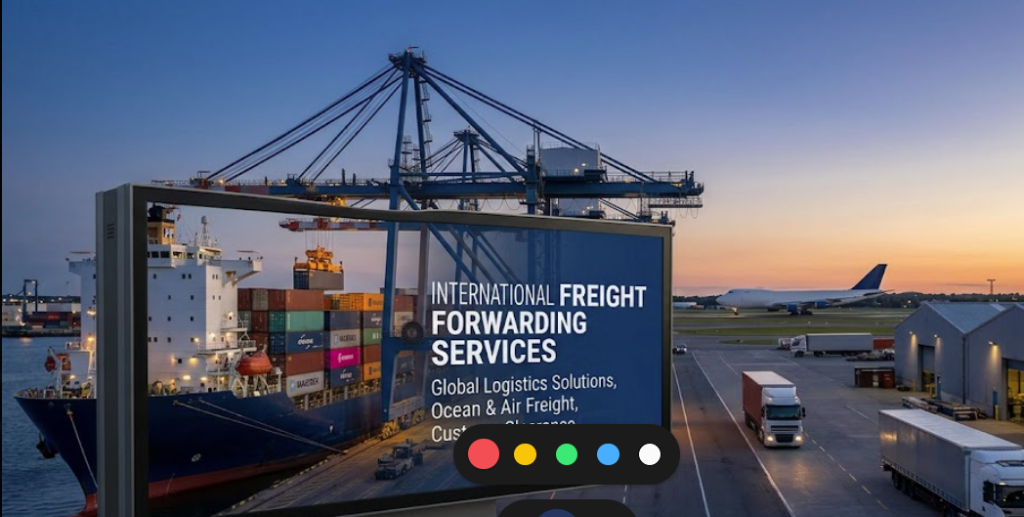
Pakistan and the UAE share one of the most active bilateral trade corridors in the region — worth over $8.5 billion annually and covering everything from textiles and mangoes to surgical instruments and construction materials. Whether you are a Karachi-based exporter shipping a full container of readymade garments to Dubai, a Lahore manufacturer sending surgical instruments to Abu Dhabi, or a Sialkot sports goods company consolidating an LCL shipment to Jebel Ali, commercial freight forwarding between Pakistan and the UAE involves a specific set of rules, documents, costs, and compliance requirements that generic shipping guides simply do not cover.
This is the guide that does. It covers the entire commercial freight journey — WeBOC export filing, Form E requirements, UAE customs duty and VAT structure, product-specific regulations for Pakistan's top export categories, city-to-city routing, and the practical decisions that determine whether your commercial shipment clears quickly or gets held.
Why the Pakistan-UAE Trade Route Has Its Own Rules
The Pakistan-UAE route is not just a long-distance delivery. It sits at the intersection of Pakistan's Federal Board of Revenue (FBR) export compliance system, the State Bank of Pakistan's foreign exchange controls, the UAE's GCC Customs Union framework, and the UAE Federal Tax Authority's VAT regime. A business owner who has shipped domestically or even to Europe will find that this route has its own specific documentation stack — most critically the Export Form E and the WeBOC Goods Declaration on the Pakistani side, paired with UAE customs duty and VAT assessment on the UAE side.
Getting even one of these elements wrong can stall a commercial shipment at either end of the journey.
The Pakistani Export Documentation Stack: What You Need Before Your Cargo Moves
Commercial exports from Pakistan require a specific set of documents, and unlike personal shipments, these cannot be simplified or consolidated. Every commercial consignment leaving Pakistan for the UAE needs the following:
WeBOC Export GD (Goods Declaration)
The Goods Declaration filed through WeBOC is the foundational export document for every commercial shipment. Your freight forwarder or licensed clearing agent files this electronically with Pakistan Customs, declaring the nature, quantity, HS code classification, and declared FOB value of the goods. An incorrect HS code at this stage does not just cause a customs delay — it can mismatch with your bank's Form E, triggering foreign exchange compliance issues with the State Bank of Pakistan that can outlast the shipment itself. See our customs clearance process in Pakistan guide for full WeBOC filing detail.
Export Form E
Form E is a mandatory document issued by Pakistan's State Bank and required for all commercial exports. It records the foreign exchange value of the export, ensuring that export proceeds are repatriated back to Pakistan within the required timeframe — typically 180 days for most commercial categories. Failure to close Form E on time after the shipment has arrived and been paid for is a serious compliance matter, and the penalties for non-compliance fall on the exporter, not the freight forwarder.
Form E must be submitted before the shipment is loaded, and the declared value on the Form E must match the commercial invoice and the WeBOC GD exactly. Any discrepancy between these three documents will cause problems — either at the time of export clearance or when the State Bank conducts its post-export reconciliation.
Commercial Invoice
The commercial invoice must state the exporter and importer details, a full description of the goods, HS code, quantity, unit price, total value, currency, and the agreed Incoterm (such as FOB, CIF, or EXW). UAE customs will use this document as the primary basis for duty assessment, so accuracy is not optional.
Packing List
A detailed packing list must accompany every shipment, breaking down the contents, number of packages, gross and net weight, and dimensions. This must match the commercial invoice exactly — any discrepancy between these two documents is one of the most common triggers for a UAE customs hold.
Bill of Lading or Air Waybill
Issued by the carrier upon loading, the Bill of Lading or Air Waybill is the document of title for the cargo and confirms that the goods have been accepted for transport.
Certificate of Origin
For most commercial exports from Pakistan, a Certificate of Origin (COO) is required by UAE customs. This document confirms the country of manufacture and is issued by TDAP (Trade Development Authority of Pakistan) or a recognized Chamber of Commerce. Some product categories also require a phytosanitary certificate (fresh produce and agricultural goods), a fumigation certificate (wooden packaging), or specific regulatory certificates depending on the UAE's import requirements for that product category.
UAE Customs Duty and VAT: What Your Buyer Actually Pays
Understanding the UAE-side cost structure matters whether you are the exporter or the importer, because it directly affects landed cost, price competitiveness, and your buyer's willingness to source from Pakistan.
UAE customs clearance for commercial imports works as follows. The customs clearance process is governed by the GCC Customs Union framework, with duty assessed at 5% of the CIF (Cost, Insurance, Freight) value of the shipment. This standard rate applies to the vast majority of commercial goods, including textiles, finished garments, food products, manufactured goods, and most industrial inputs.
- Standard UAE Customs Duty: 5% of the CIF value of the shipment
- UAE VAT: 5% applied on the duty-inclusive value — meaning 5% calculated on (goods value + customs duty). VAT-registered UAE businesses can recover import VAT through their VAT returns under the reverse charge mechanism, but for unregistered importers, this is an irrecoverable cost.
- Excise Duty — not applicable to standard Pakistani export categories, but relevant for tobacco and certain beverages.
- Free Zone Imports — goods entering a UAE Free Zone (such as Jebel Ali Free Zone, Dubai Airport Free Zone, or Abu Dhabi Global Market) are not subject to customs duty or VAT until they move from the Free Zone into the UAE mainland. This makes Free Zone delivery addresses a common strategy for UAE trading companies that re-export a portion of their imports.
HS Code Classification: Why It Matters More on This Route Than You Think
HS codes on the Pakistan-UAE route carry more weight than on most other export corridors, for two reasons.
First, the Form E value and the WeBOC GD value must both match the commercial invoice, and the HS code on the WeBOC GD determines which export rebate schemes, duty drawback programs, or DLTL (Drawback of Local Taxes and Levies) claims apply. An exporter using the wrong HS code can inadvertently forfeit legitimate export incentives worth a meaningful percentage of the shipment value.
Second, UAE customs uses the HS code to determine which inspection regime applies on arrival. Some HS code categories trigger mandatory inspection, require specific regulatory pre-approvals, or are subject to import restrictions. Getting this wrong means your buyer's shipment sits at Jebel Ali or Dubai customs while the documentation is corrected — at the seller's expense if the COO or invoice doesn't match the declared code.
City-to-City Routing: Karachi, Lahore, and Islamabad to Dubai, Sharjah, and Abu Dhabi
The Pakistan-UAE route operates through several distinct origin-destination pairs, and the right routing depends on where your goods are manufactured or sourced.
Karachi to Dubai / Jebel Ali (Sea Freight)
This is the highest-volume commercial freight lane on the Pakistan-UAE route. Sea freight from Karachi Port or Port Qasim to Jebel Ali takes approximately 4 to 7 days in transit, making it one of the shortest sea freight routes in South Asia. Carriers including Maersk, MSC, CMA CGM, and Hapag-Lloyd operate regular weekly services on this lane, with both FCL and LCL options available.
For large commercial volumes — textiles, bulk food commodities, construction materials, industrial goods — an FCL shipment from Karachi to Jebel Ali is typically the most cost-effective option. LCL consolidation services are widely available for smaller commercial consignments, with departures several times per week. See our Karachi to Dubai shipping cost guide for detailed pricing.
Lahore to Dubai / Sharjah (Air Freight)
Lahore is Pakistan's industrial and manufacturing heartland, home to a significant portion of its textile, leather, and pharmaceutical export capacity. For commercial shipments originating in Lahore, air freight via Allama Iqbal International Airport (LHE) to Dubai International Airport or Sharjah is the dominant mode for time-sensitive cargo — samples, first shipments, replenishment orders, or goods with short shelf life. Emirates SkyCargo, PIA Cargo, and Turkish Cargo are among the main carriers on this route.
For heavy commercial volumes originating in Lahore and destined for UAE sea ports, inland road transport to Karachi Port followed by sea freight is the standard approach, typically adding 1 to 2 days to the overall transit time.
Islamabad / Rawalpindi to Abu Dhabi / Dubai (Air Freight)
Commercial shipments from Islamabad and Rawalpindi primarily move via Islamabad International Airport (ISB) for air freight. Abu Dhabi International Airport and Dubai International Airport are the main UAE arrival points, with transit times of under 24 hours on direct flights.
Pakistan's Top Commercial Export Categories to the UAE: Category-Specific Notes
Textiles and Readymade Garments
Textiles are Pakistan's single largest export category globally, and the UAE is one of the primary destination markets. Commercial textile shipments to the UAE attract the standard 5% UAE customs duty. The key compliance requirements are accurate HS code classification (Chapters 50–63 of the harmonized tariff), a valid Certificate of Origin from TDAP or a recognized Chamber of Commerce, and precise invoice values that reflect the actual transaction price.
Fresh Mangoes and Agricultural Products
Pakistan's mango export season (roughly May to September) generates significant commercial freight volume on the Pakistan-UAE route. Fresh mangoes require a phytosanitary certificate issued by Pakistan's Department of Plant Protection confirming the consignment is free of pests and diseases, and a fumigation certificate where required by UAE Food Safety authorities. Agricultural produce destined for the UAE mainland must meet UAE Food Safety Department registration requirements for the specific product. Air freight is almost universally used for fresh produce given the shelf life constraints.
Surgical Instruments and Medical Devices
Sialkot supplies a significant portion of global demand for surgical instruments, and the UAE is both a direct market and a re-export hub for these goods. Commercial shipments require a Certificate of Origin, correct HS code classification under Chapter 90 of the tariff schedule, and for certain medical device categories destined for regulated healthcare use in the UAE, registration with UAE Health Authority may be required before the goods can clear customs. Exporters who have not verified the UAE's specific import approval requirements for their product category in advance risk shipments being held at the port pending regulatory confirmation.
Food Products: Rice, Spices, and Processed Foods
Basmati and long-grain rice are among Pakistan's most consistent agricultural exports to the UAE. Spices, processed foods, and packaged goods require a UAE Food Safety import certificate and must comply with UAE labelling regulations (Arabic labelling is required for goods sold to end consumers). For rice, a phytosanitary certificate and certificate of origin are standard requirements. Under the GCC Unified Customs tariff, most food commodities attract the 5% standard duty rate.
Sea Freight Options: FCL vs LCL for Commercial Exporters
Commercial freight charges on the Pakistan-UAE sea route depend on whether you ship FCL or LCL. Understanding how total cargo charges are structured helps you budget accurately before committing to a mode.
FCL (Full Container Load) is the standard choice for large commercial exporters with regular, high-volume shipments. A 20-foot container from Karachi to Jebel Ali offers the lowest cost per unit for most commercial goods, provided the shipment volume justifies a full container. For textile exporters shipping completed bulk orders, FCL is almost always the right choice.
LCL (Less than Container Load) allows smaller commercial exporters to share container space, paying only for the volume they use (measured in CBM). LCL is well suited to new-to-export businesses, businesses building UAE buyer relationships with smaller initial orders, or companies shipping commercial samples ahead of a larger order. LCL consolidation from Karachi to Jebel Ali operates multiple times per week through Pakistan's licensed NVOCC operators.
UAE Free Zone vs. Mainland Delivery: A Commercial Decision
Where your goods are delivered in the UAE has significant commercial and tax implications that many Pakistani exporters overlook. Goods delivered to a UAE Free Zone — such as Jebel Ali Free Zone (JAFZA), Dubai Airport Free Zone (DAFZA), or Abu Dhabi's KIZAD — are not subject to UAE customs duty or VAT upon arrival. Duty and VAT are only assessed when goods move from the Free Zone into the UAE mainland. This means that UAE-based trading companies that re-export a portion of Pakistani imports to other Gulf markets often prefer Free Zone delivery, since it avoids paying UAE duty on goods that will ultimately leave the country.
For Pakistani exporters, understanding whether their UAE buyer operates from a Free Zone or the mainland is important for pricing discussions, since a Free Zone buyer's landed cost structure is fundamentally different from a mainland buyer's.
Common Mistakes That Hold Commercial Shipments
- Form E value does not match the commercial invoice — triggers a State Bank of Pakistan compliance issue that can affect your export rebates and future export clearances
- Incorrect HS code on the WeBOC GD — leads to duty disputes on the UAE side and potential mismatch with export incentive claims in Pakistan
- Missing or incorrect Certificate of Origin — one of the most frequent causes of UAE customs holds; for agricultural products, a missing phytosanitary certificate has the same effect
- Packaging discrepancies between the packing list and the commercial invoice — number of packages, weights, or dimensions that don't match trigger UAE customs inspection
- Not verifying UAE import approval requirements for regulated products — surgical instruments and medical devices bound for healthcare use, certain food additives, and pharmaceutical ingredients may require UAE Health Authority or food safety pre-approvals
- Shipping to a UAE mainland address without accounting for the 5% duty and 5% VAT in the landed cost — if your buyer hasn't budgeted for UAE import taxes, you may receive payment disputes after delivery
Why Working With a Pakistan-UAE Specialist Matters
Commercial freight on the Pakistan-UAE route involves compliance on two separate regulatory systems — Pakistan's FBR/State Bank on the export side and the UAE's Federal Customs Authority/FTA on the import side — and the documentation requirements are more interconnected than they appear. A mismatch introduced at the WeBOC filing stage in Karachi can create a problem that only surfaces at Jebel Ali customs three weeks later.
Professional freight forwarding for the Pakistan-UAE route means more than booking cargo space and printing labels. It means verifying HS codes against both Pakistani export requirements and UAE import requirements simultaneously, preparing the Form E before the goods leave, coordinating with UAE destination agents on customs clearance, and ensuring the documentation package that arrives at Jebel Ali or Dubai Airport is complete and correct before the carrier even accepts the booking. Best International Movers manages the full commercial freight journey on the Pakistan-UAE corridor — from export WeBOC filing and Form E preparation in Karachi, Lahore, or Islamabad, through sea or air transit, to UAE customs clearance and door-to-door delivery in Dubai, Sharjah, or Abu Dhabi.
Explore our Pakistan to Dubai movers, Karachi to Dubai cargo, and best freight forwarders in Pakistan guide for route-specific support.
Transit Times: Pakistan to UAE by Air and Sea
| Route | Mode | Transit Time |
|---|---|---|
| Karachi → Jebel Ali / Dubai | Sea (FCL/LCL) | 4 to 7 days |
| Karachi → Dubai Airport | Air | 1 to 3 days |
| Lahore → Dubai / Sharjah | Air | 1 to 3 days |
| Islamabad → Dubai / Abu Dhabi | Air | 1 to 2 days |
| Lahore → Jebel Ali (via Karachi by road) | Sea + Road | 6 to 10 days |
Frequently Asked Questions
What is Form E and why is it required for exports from Pakistan to the UAE?
Form E is a mandatory document issued by Pakistan's State Bank that records the foreign exchange value of every commercial export. It ensures that export proceeds are repatriated back to Pakistan within the required timeframe — typically 180 days. It must be submitted before the shipment is loaded and must match the commercial invoice and WeBOC GD values exactly.
How much UAE customs duty is payable on commercial goods from Pakistan?
The standard UAE customs duty rate is 5% of the CIF (Cost, Insurance, Freight) value of the shipment. Most commercial goods from Pakistan, including textiles, food products, manufactured goods, and industrial inputs, fall under this standard rate. UAE VAT of 5% is then applied on the duty-inclusive value.
Can Pakistani exporters access UAE Free Zone delivery to avoid duty?
Yes. Goods delivered to a UAE Free Zone are not subject to UAE customs duty or VAT at the point of entry. Duty is only assessed when goods move from the Free Zone to the UAE mainland. This arrangement is commonly used by UAE trading companies that re-export a portion of their imported goods to other GCC markets.
What certificates are required for fresh produce exports from Pakistan to the UAE?
Fresh produce including mangoes requires a phytosanitary certificate from Pakistan's Department of Plant Protection, a fumigation certificate where applicable, and compliance with UAE Food Safety Department import requirements for the specific product. Certain food products also require UAE Food Safety registration before they can be marketed to end consumers.
Why is HS code accuracy especially important for Pakistan-UAE commercial exports?
Incorrect HS codes affect both the Pakistani side (export rebate eligibility, Form E consistency, WeBOC GD accuracy) and the UAE side (duty rate applied, inspection requirements, regulatory pre-approval requirements). An HS code error can trigger a chain of compliance issues on both ends of the shipment simultaneously.
What is the cheapest way to ship commercial cargo from Pakistan to the UAE?
For most commercial volumes, sea freight FCL from Karachi to Jebel Ali is the most cost-effective option. LCL consolidation is the right choice for smaller volumes that don't justify a full container. Air freight is significantly more expensive and is typically reserved for urgent, high-value, or perishable commercial cargo.
Final Thoughts
The Pakistan-UAE commercial freight route is one of the most active in the region, but its specific compliance requirements — Form E, WeBOC GD, UAE customs duty and VAT, product-specific certifications, and Free Zone versus mainland delivery decisions — mean it rewards preparation and penalizes shortcuts. Exporters who get the documentation right before their cargo moves avoid the delays, detention charges, and payment disputes that affect those who treat it as a simpler process than it is.
Whether you are a first-time exporter building a new UAE buyer relationship or an established commercial exporter looking to streamline a high-volume corridor, working with a logistics partner who understands both ends of this specific route is the single most reliable way to protect your margins and your delivery timelines. Get a free quote: call 0300-9130211 or WhatsApp us today.
Need a shipping plan?
Get a free quotes from Best International Movers & Logistics — 0300-9130211 · info@bestintlmovers.com
Get Free Quote