International Shipping Process: Complete Step-by-Step Guide 2025–2026
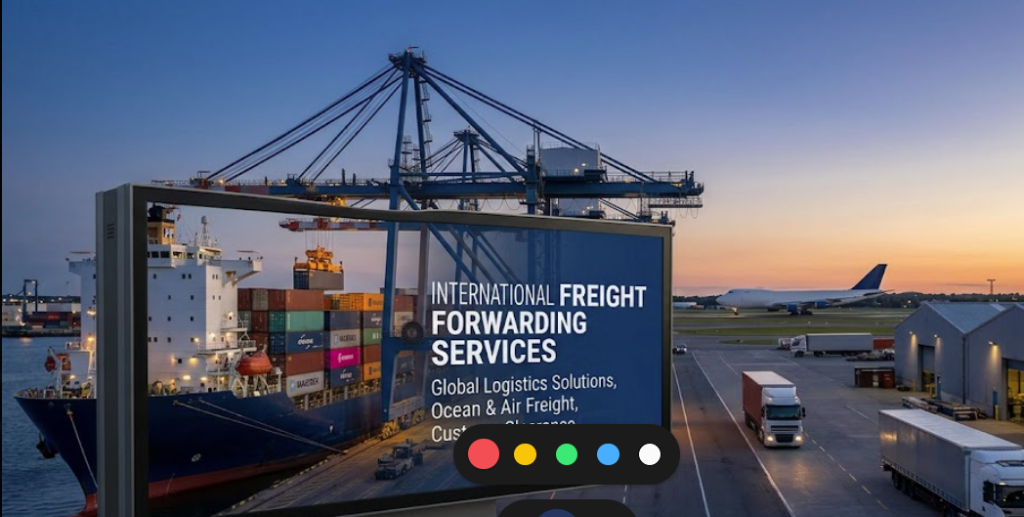
Updated June 2026 · bestintlmovers.com · Trusted by 10,000+ Shippers from Pakistan
Air Freight · Sea Freight · Customs Clearance · Documentation · Incoterms · Tracking — Pakistan to UAE, UK, USA & Beyond
Whether you are a first-time exporter sending textiles from Karachi to Dubai, a family relocating from Lahore to London, a business importing machinery from China to Islamabad, or an individual sending personal effects from Pakistan to Canada — understanding the international shipping process end-to-end is the single most important thing you can do to protect your cargo, your timeline, and your money.
International shipping is not just about putting goods on a plane or ship. It is a complex, multi-stage process involving freight booking, export customs clearance, cargo documentation, transit, import customs clearance, duty payment, and last-mile delivery — each stage with its own rules, timelines, costs, and potential pitfalls.
This comprehensive guide walks you through every single step — from the moment you decide to ship, to the moment your cargo is safely delivered at its destination.
Air Freight: 2–7 days door-to-door · Sea LCL: 10–35 days · Sea FCL: 8–30 days · Courier (DHL/FedEx/UPS): 2–5 days · Road freight (Afghanistan/Iran): 5–15 days. Transit time depends on origin city, destination port, customs efficiency, and whether documentation is complete.
1. International Shipping Process — Big Picture Overview
Every international shipment — whether a 1 kg parcel or a 40-foot container — goes through these same fundamental stages:
| Phase | Stage | Who Is Responsible | Typical Time |
|---|---|---|---|
| Pre-Shipment | Choose shipping method + get quotes | Shipper + Freight Forwarder | 1–3 days |
| Pre-Shipment | Book shipment with forwarder or carrier | Shipper confirms booking | 1–2 days |
| Pre-Shipment | Pack, label, and prepare cargo | Shipper (or mover) | 1–5 days |
| Pre-Shipment | Prepare all export documents | Shipper + Clearing Agent | 1–3 days |
| Origin | Export customs clearance | Clearing Agent + Customs | 1–7 days |
| Origin | Cargo pickup / delivery to port or airport | Freight Forwarder / Trucker | 1 day |
| Origin | Loading onto vessel or aircraft | Terminal Operator / Airline | Per schedule |
| Transit | International transit / voyage | Carrier | 2–35 days |
| Destination | Import customs clearance | Destination Agent + Customs | 1–10 days |
| Destination | Duty & tax payment | Consignee / Agent | 1–3 days |
| Destination | Last-mile delivery | Delivery Agent / Trucker | 1–5 days |
2. Step 1: Choosing Your Shipping Method — Air vs Sea vs Courier
The first and most consequential decision is choosing your shipping method. This determines cost, transit time, cargo safety, documentation requirements, and the type of freight forwarder you need.
| Method | Best For | Cost Level | Speed | Max Size/Weight |
|---|---|---|---|---|
| Air Freight | Urgent, high-value, perishable cargo | Highest | 2–7 days | No limit (cost rises fast) |
| Sea FCL | Large volumes, full household moves | Lowest/kg | 8–35 days | 20ft: ~25 CBM / 40ft: ~55 CBM |
| Sea LCL | Small-medium volumes, non-urgent | Low | 10–35 days | 1 CBM minimum |
| Express Courier | Documents, parcels up to 30 kg | High | 2–5 days | Typically 30–70 kg max |
| Road Freight | Afghanistan, Iran, Central Asia | Medium | 5–15 days | Full truck loads |
| Air + Sea Combo | Balance speed and cost for large moves | Medium | 7–21 days | Split shipment |
When to Choose Air Freight
- Cargo value is high — cost of delay exceeds cost of premium freight
- Time-sensitive: fashion orders, perishables, medical supplies
- Shipment is small — under 200 kg, where sea LCL loses its cost advantage
- Destination has poor sea connectivity (landlocked countries, remote locations)
- Customer contract specifies air delivery
When to Choose Sea Freight
- Cargo volume exceeds 3 CBM — sea LCL becomes cheaper than air
- Goods are not time-sensitive — standard commercial orders with lead time
- Shipping heavy/bulky items: furniture, machinery, vehicles, construction materials
- Household goods move — a family's belongings almost always go by sea
- Budget is priority — sea freight is 60–80% cheaper than air for same volume
Under 100 kg AND urgent → Air freight always · 100–500 kg AND 7+ days available → Compare air vs sea LCL · Over 3 CBM AND 14+ days available → Sea LCL or FCL · Full household move → Sea freight · Car shipping → Sea freight only (RoRo or container) · Documents / samples → Courier
3. Step 2: Getting Freight Quotes — What to Compare
This is where many shippers make costly mistakes — comparing quotes that are not truly like-for-like, or choosing the cheapest quote that later reveals hidden charges.
Information You Must Provide to Get an Accurate Quote
| Information Required | Why It Matters |
|---|---|
| Origin city and address | Determines inland haulage cost and port/airport used |
| Destination city and address | Determines destination port/airport and delivery cost |
| Cargo description / commodity | Affects duty rates, restrictions, handling requirements |
| HS (Harmonized System) code | Determines import duty at destination |
| Gross weight (kg) | Air freight charged on actual or volumetric weight |
| Dimensions of each piece (L×W×H cm) | Volumetric weight for air; CBM for sea |
| Total CBM (cubic meters) | Sea freight LCL charged per CBM |
| Cargo value (USD) | For insurance and customs declaration |
| Incoterm required (EXW, FOB, CIF etc.) | Determines what the freight quote covers |
| Required delivery date | Determines mode selection and booking urgency |
What to Look for When Comparing Freight Quotes
- Is it airport-to-airport / port-to-port OR door-to-door?
- Does it include origin customs clearance and documentation?
- Does it include destination customs clearance and duty?
- Is cargo insurance included or optional?
- What is the transit time commitment — is it guaranteed?
- What are the payment terms — full upfront or split?
- What happens if cargo is delayed — who bears the cost?
4. Step 3: Booking Your Shipment with a Freight Forwarder
A reputable freight forwarder will send you a Booking Confirmation that includes all shipment details.
- Shipper name, address, and contact
- Consignee name and address (recipient at destination)
- Cargo description and HS code
- Number of pieces, weight, and dimensions
- Shipping line / airline name and service
- Vessel name and voyage number (sea) or flight number (air)
- Port of Loading (POL) and Port of Discharge (POD)
- ETD and ETA
- Freight rate and all surcharges — itemised
- Cargo cut-off date and document cut-off date
5. Step 4: Packing & Preparing Your Cargo for International Shipping
Improper packing is one of the leading causes of cargo damage. International cargo goes through multiple handling stages — each creates risk for poorly packed cargo.
- Use double-walled corrugated cardboard boxes for all carton cargo
- Wrap individual items in bubble wrap, foam, or packing paper before boxing
- Fill all empty space in boxes to prevent movement
- Mark all boxes: FRAGILE, THIS SIDE UP, DO NOT STACK (where applicable)
- Label each box: Shipper name, consignee name, destination address, box number (1 of 10, etc.)
- Wooden packaging must be ISPM-15 compliant (heat-treated)
- Palletise heavy cartons and wrap with stretch film for stability
- For household goods: professional packing by experienced international movers recommended
What Is Volumetric Weight and Why Does It Matter?
For air freight and courier services, freight is charged on whichever is greater: actual gross weight or volumetric weight.
AIR FREIGHT: L × W × H (cm) ÷ 6,000 · COURIER (DHL/FedEx): L × W × H (cm) ÷ 5,000 · SEA LCL: CBM = L × W × H (m). Example: 60×50×40 cm box = 20 kg volumetric. If actual weight = 8 kg, you pay for 20 kg.
6. Step 5: Export Documentation — Every Document Explained
Missing, incorrect, or late documents are the single most common cause of customs delays, cargo holds, and unexpected costs.
Core Documents — Required for ALL International Shipments
| Document | Purpose | Who Prepares It |
|---|---|---|
| Commercial Invoice | Declares value, description, and parties | Exporter |
| Packing List | Details each piece: weight, dimensions, contents | Exporter |
| Bill of Lading (B/L) | Sea freight contract of carriage — title to goods | Shipping Line |
| Air Waybill (AWB) | Air freight contract of carriage — non-negotiable | Airline / IATA Agent |
| Certificate of Origin (CoO) | Proves where goods were manufactured | Chamber / TDAP |
| Goods Declaration (GD) | Pakistan customs export filing via WeBOC | Clearing Agent |
| Form E | State Bank Pakistan — forex repatriation declaration | Exporter + Authorized Bank |
| Packing Declaration | Confirms wooden packaging is ISPM-15 treated | Exporter / Packer |
Additional Documents — Specific Cargo or Destinations
| Document | Required For | Issuing Authority |
|---|---|---|
| Phytosanitary Certificate | Plants, fruits, vegetables, seeds | Dept of Plant Protection, Pakistan |
| Export Health Certificate | Seafood, meat, dairy, food products | Animal Quarantine Dept |
| Halal Certificate | Meat and food to Gulf/Muslim countries | Pakistan Halal Authority |
| Fumigation Certificate | Wooden packing — most countries | Licensed fumigation company |
| MSDS | Chemicals, dangerous goods | Manufacturer |
| Form 'A' / REX Certificate | Preferential duty under UK/EU GSP | TDAP / Exporter |
| Drug Regulatory Certificate | Pharmaceuticals | DRAP Pakistan |
7. Step 6: Export Customs Clearance Process — Pakistan
In Pakistan, all export cargo must be cleared through Pakistan Customs using the WeBOC electronic system. This process is managed by a licensed customs clearing agent and typically takes 1–3 days for Green or Yellow channel cargo.
- Prepare and Verify All Documents — Commercial Invoice, Packing List, Certificate of Origin, Form E, and commodity-specific certificates
- File Goods Declaration (GD) on WeBOC — HS codes, cargo description, declared value, exporter NTN, vessel/flight details
- Risk Management System (RMS) Assessment — GREEN (auto-release), YELLOW (document examination), or RED (physical examination)
- Green Channel — Auto-Release: LEO issued automatically, same day
- Yellow Channel — Document Examination: Appraiser reviews documents, 1–2 business days
- Red Channel — Physical Examination: Customs officers examine cargo at terminal, 3–7 business days
- Let Export Order (LEO) Issued — authority to load cargo onto vessel or aircraft
- Cargo Loaded on Vessel / Aircraft — B/L (sea) or AWB (air) issued
8. Step 7: Cargo Pickup & Loading — Port or Airport
Sea Freight — Terminal Operations
- FCL: Container stuffed at factory or CFS, sealed, delivered to terminal by truck
- LCL: Cargo delivered to NVOCC's CFS for consolidation before terminal delivery
- VGM (Verified Gross Mass): mandatory weight verification before terminal acceptance (SOLAS)
- Terminal Cut-off: typically 24–48 hours before vessel departure
- EDI Submission: all cargo details submitted electronically to shipping line and terminal
Air Freight — Airport Operations
- Cargo delivered to airline cargo terminal (JIAP cargo complex) before cut-off
- Security screening: all air cargo undergoes X-ray or physical screening (ICAO/IATA)
- Build-up: cargo built into Unit Load Devices (ULDs) by airline or handler
- DG segregation: Dangerous Goods stored and loaded per IATA DGR
- Perishable priority: fresh cargo loaded last to minimise temperature exposure
9. Step 8: International Transit — What Happens While Your Cargo Is at Sea or in the Air
Sea Freight Transit — Direct vs Transhipment
| Route Type | Description | Pros | Cons |
|---|---|---|---|
| Direct Service | Vessel sails directly from Karachi to destination port | Fastest, lowest damage risk | Not always available |
| Transhipment (1 port) | Cargo transferred at hub port (Jebel Ali, Colombo, Singapore) | More route options, competitive rates | Adds 5–10 days, slight handling risk |
| Multi-transhipment | Cargo transferred at 2+ ports | Reaches remote/niche ports | Slower, higher damage risk |
Common Transhipment Hubs for Pakistan Cargo
- Jebel Ali (UAE): Main hub for Pakistan–Europe and Pakistan–Africa routes
- Colombo (Sri Lanka): Alternative hub for Far East, USA, and some Europe routes
- Singapore: Trans-Pacific routes to USA, Canada, and Australia
- Port Klang (Malaysia): Alternative Asia transhipment point
- Istanbul (Turkey): Arkas Line hub for Turkey and Mediterranean destinations
What Can Go Wrong During Transit?
| Risk | Probability | Prevention | Insurance Coverage |
|---|---|---|---|
| Physical damage | Low–Medium | Quality packing, adequate insurance | Yes — All Risks policy |
| Delay (weather, congestion) | Medium | Build buffer into schedules | Yes — if delay clause |
| Container rolled | Low | File documents on time, track booking | No — not typically |
| Cargo theft | Very Low | Security seals, GPS trackers | Yes — All Risks policy |
| Water damage | Low | Desiccant bags, container check | Yes — All Risks policy |
10. Step 9: Import Customs Clearance at Destination
- Pre-Arrival Filing — import documentation filed BEFORE vessel or aircraft arrives (USA, Canada, UK, UAE)
- Submit Import Declaration — destination customs broker files Entry with CBSA, CBP, HMRC, Dubai Customs, etc.
- Customs Assessment — officer reviews declaration, HS code, declared value, licensing requirements
- Duty Calculation — Import duty = (CIF Value × Duty Rate%). VAT/GST on (CIF + Duty)
- Payment of Duties — consignee or broker pays import duties and taxes
- Customs Examination (if selected) — physical check of declared description, quantity, and value
- Release for Delivery — Customs issues Release Order; delivery agent collects cargo from terminal
11. Step 10: Duty & Tax Payment at Destination
| Destination | Duty Rate | VAT/GST | Notes for Pakistan Exports |
|---|---|---|---|
| UAE (Dubai/AD/SHJ) | 5% standard | 5% VAT | Used personal effects: duty-free with residency |
| UK | 0–12% (varies) | 20% VAT | Pakistan GSP reduces many textile rates to 0–4% |
| Germany / EU | 0–12% (varies) | 19–21% VAT | EU GSP applies — reduced rates for Pakistan |
| USA | 0–37.5% (varies) | No federal VAT | Section 301 tariffs on some goods; check HS code |
| Canada | 0–20% (varies) | 5% GST + PST | CPTPP may reduce rates; B4 for household goods |
| Australia | 0–5% (mostly) | 10% GST | Pakistan goods: general duty rates |
| Saudi Arabia | 5% standard | 15% VAT | GCC common external tariff |
| Singapore | 0% most goods | 9% GST | Free trade hub — very low import duties |
12. Step 11: Last-Mile Delivery to Final Address
| Option | Best For | Cost Level | Typical Time |
|---|---|---|---|
| Standard Trucking | All cargo types | Low–Medium | 1–3 days from port |
| Express Delivery | Urgent cargo post-customs | High | Same day or next day |
| Self-Collection | Consignee near port | Lowest | Self-arranged |
| White Glove Delivery | Household goods, furniture | Highest | Scheduled appointment |
| Courier Final Mile | Small parcels (air freight) | Medium | 1–2 days |
13. Incoterms 2020 — Complete Guide for International Shippers
Incoterms define exactly where the seller's responsibility ends and the buyer's begins. Choosing the wrong Incoterm is one of the most expensive mistakes in international shipping.
| Incoterm | Full Name | Seller Responsible For | Buyer Responsible For | Best Used |
|---|---|---|---|---|
| EXW | Ex Works | Nothing — goods at seller's premises | Everything from factory to destination | Experienced buyers only |
| FCA | Free Carrier | Delivery to named carrier at origin | Main freight + destination costs | Most flexible — recommended |
| FOB | Free on Board | Delivery onto vessel at origin port | Ocean freight + destination costs | Sea freight standard |
| CFR | Cost and Freight | Origin + ocean freight to destination port | Insurance + destination costs | Sea — buyer arranges insurance |
| CIF | Cost Insurance Freight | Origin + ocean freight + insurance | Destination customs + delivery | Sea — seller arranges insurance |
| CPT | Carriage Paid To | All freight to named destination point | Insurance + destination customs | Air freight / multimodal |
| DAP | Delivered at Place | Everything except destination customs + duty | Import customs + duty only | E-commerce, small parcels |
| DDP | Delivered Duty Paid | EVERYTHING — including import duty | Nothing | Full-service seller |
FOB Karachi: Most common for textile exporters · CIF [Destination Port]: Seller arranges freight and insurance · EXW: Avoid unless buyer is very experienced · DDP: Only if you have a customs broker at destination · FCA: Recommended for air freight. Always state Incoterm AND named place: e.g. 'FOB Karachi Port' not just 'FOB'
14. Cargo Insurance — Why It Is Not Optional
Carrier liability is severely limited by international conventions — far below the actual value of most cargo.
| Mode | Convention | Carrier Liability Limit | Reality Check |
|---|---|---|---|
| Sea Freight | Hague-Visby Rules | USD 2.00/kg OR USD 666.67/package | USD 50,000 textiles at 2,000 kg = only USD 4,000 liability |
| Air Freight | Montreal Convention | ~USD 26 per kg | USD 30,000 electronics at 50 kg = only USD 1,300 liability |
| Road Freight | CMR Convention | ~USD 12 per kg | Very limited coverage |
| Courier | Carrier T&Cs | USD 100–500 flat rate | Declared value cover must be paid upfront |
- All Risks (ICC A): Broadest cover — recommended for all valuable cargo (0.3–0.7% of CIF value)
- With Average (ICC B): Major perils only — no theft or rain water damage
- Free of Particular Average (ICC C): Narrowest — only total loss. Not recommended
- Example: USD 20,000 cargo → insurance cost USD 60–140. Compare to potential loss of USD 20,000
15. International Shipping from Pakistan — Route-Specific Process Guide
Pakistan to UAE
- Export: WeBOC GD filing + Form E (SBP) + Certificate of Origin mandatory
- Sea freight: Karachi to Jebel Ali — 3–6 days direct sailing, daily vessels
- Air freight: Karachi/Lahore/ISB to DXB/AUH/SHJ — daily flights, 24–48 hrs airport-to-airport
- UAE import: 5% customs duty, 5% VAT via Dubai Trade portal
- Personal effects: Duty-free for UAE residents with valid Emirates ID
Pakistan to UK
- Certificate of Origin (Form A or REX) critical for UK GSP reduced duty
- Sea freight: 22–30 days via Jebel Ali or Colombo to Felixstowe/Southampton
- Air freight: 2–4 days via Dubai or Istanbul to London Heathrow
- UK import: HMRC CDS — UK-licensed customs broker required
- Transfer of Residence (ToR) relief: used household goods duty-free for new UK residents
Pakistan to USA
- Sea freight: 28–40 days via Jebel Ali or Colombo to New York/Los Angeles
- Air freight: 3–5 days via Dubai/Doha to JFK or LAX
- ISF (Importer Security Filing): must be filed 24 hours BEFORE loading in Pakistan
- CBP ACE system — prior to arrival filing required
- Section 321 de minimis: shipments under USD 800 enter USA duty-free
Pakistan to Canada
- Sea freight: 32–45 days via Singapore or Jebel Ali to Halifax/Vancouver
- Air freight: 3–5 days via UAE/Istanbul to Toronto (YYZ) or Vancouver (YVR)
- CBSA Pre-arrival review system (PARS)
- GST: 5% on most imported goods
- Household goods for new immigrants: duty-free under B4 concession
16. International Shipping Costs — Complete Rate Breakdown 2025
Total cost model: Karachi to Dubai Sea Freight (LCL — 5 CBM)
| Cost Component | Amount | Who Pays / Notes |
|---|---|---|
| Inland trucking (factory to Karachi Port) | PKR 8,000–15,000 | Shipper — distance dependent |
| Origin CFS / stuffing charge | USD 40–75 (5 CBM) | NVOCC rate per CBM |
| LCL ocean freight (Karachi–Jebel Ali) | USD 200–375 | 5 CBM × USD 40–75/CBM |
| Origin THC | USD 50–100 | Port charge |
| Bill of Lading / HBL issuance | USD 30–60 | Shipping line / NVOCC |
| Origin customs documentation (GD) | PKR 2,500–5,000 | Clearing agent |
| Certificate of Origin | PKR 500–1,500 | Chamber of Commerce |
| Cargo insurance (0.5% of USD 10,000) | USD 50 | Optional but recommended |
| Destination THC (Jebel Ali) | USD 40–80 | Destination agent |
| UAE customs clearance | AED 200–400 | Destination broker |
| Last-mile delivery Dubai | AED 100–300 | Destination agent |
| TOTAL APPROXIMATE (all-in door to door) | USD 600–1,100 | Request all-in quote for exact figure |
17. Common International Shipping Mistakes & How to Avoid Them
| Mistake | Impact | How to Avoid |
|---|---|---|
| Wrong HS code declared | Wrong duty charged, customs examination | Use official Pakistan Customs HS code finder |
| Under-valuing cargo on invoice | Customs fraud risk, cargo seizure | Always declare true transaction value |
| Missing Form E (Pakistan exports) | Cargo held, penalties | File Form E with authorized bank BEFORE GD |
| Missing phytosanitary cert (food) | Cargo refused at destination | Apply 3–5 days before shipment |
| Wooden packing not ISPM-15 | Cargo quarantined/returned | Use only heat-treated wood with HT stamp |
| Wrong Incoterm on invoice | Dispute about who pays freight/duty | State Incoterm + named place on all docs |
| No cargo insurance | Total loss with no recovery | Always take All Risks (ICC A) policy |
| Booking with unlicensed agent | Cargo collected, company disappears | Verify IATA licence, C-Licence, WeBOC registration |
| Missing cargo cut-off date | Cargo rolled — 7–14 day delay | Book 7–10 days early, track cut-off dates |
| DG cargo not declared | Cargo removed, legal action | Always declare dangerous goods per IATA DGR |
18. Prohibited & Restricted Items in International Shipping
Items Prohibited on ALL International Flights / Air Cargo
- Lithium batteries (loose, unpackaged) — require IATA PI 965–970 compliance
- Undeclared Dangerous Goods
- Firearms and ammunition without international arms export licence
- Counterfeit goods and trademark-infringing products
- Narcotics and illegal drugs — absolute prohibition
Items Prohibited for Export from Pakistan
- Antiques and archaeological artifacts without Ministry of Culture export permit
- Protected wildlife and CITES-listed species
- Currency above USD 10,000 equivalent without SBP declaration
- Classified government documents
- Goods subject to UN or government trade sanctions
Items Prohibited for Import into UAE
- Narcotics, cannabis products, CBD oils — zero tolerance
- Pork products and alcohol (except licensed channels)
- Gambling equipment and paraphernalia
- Publications deemed offensive to Islamic values or UAE law
- Certain medications with controlled substances — check UAE MOH positive list
19. How to Track Your International Shipment
| Stage | Tracking Method | Information Available |
|---|---|---|
| Sea freight (vessel) | Shipping line website — enter B/L number | Vessel position, ETA, port status |
| Air freight | Airline cargo portal — enter AWB number | Flight status, destination ETA |
| Courier | DHL/FedEx/UPS website — enter tracking number | Real-time scan history, delivery ETA |
| Port customs (Pakistan) | WeBOC portal — GD number | GD status, channel assignment, LEO |
| UAE customs | Dubai Trade portal or MIRSAL2 | Clearance status, duty amount |
| UK customs | HMRC CDS portal | Entry status, examination notice |
| USA customs | CBP ACE portal | Entry status, holds, release |
| Last-mile delivery | Delivery company portal or WhatsApp updates | Delivery window, driver location |
20. Frequently Asked Questions — International Shipping Process
How long does the international shipping process take from Pakistan?
Total door-to-door time depends on mode and route. Air freight from Karachi to Dubai takes 3–5 days door-to-door. Sea freight from Karachi to Dubai takes 10–18 days door-to-door. Sea freight from Karachi to UK takes 28–40 days door-to-door. Sea freight from Karachi to USA takes 35–50 days door-to-door. Add 3–7 days if your cargo goes through Red Channel examination at Pakistan Customs, or if destination customs requires examination.
What documents are needed for international shipping from Pakistan?
Core documents for all Pakistan exports: Commercial Invoice, Packing List, Goods Declaration (GD via WeBOC), Certificate of Origin, Form E (State Bank of Pakistan), and Bill of Lading or Air Waybill. Additional documents depending on commodity: Phytosanitary Certificate (fresh produce), Health Certificate (seafood/meat), Fumigation Certificate (wooden packaging), MSDS (chemicals), DRAP certificate (pharmaceuticals). Your freight forwarder or clearing agent will guide you on exactly which documents are needed for your specific cargo and destination.
What is the cheapest international shipping option from Pakistan?
Sea LCL (Less than Container Load / groupage) is the most affordable option for cargo volumes of 1–15 CBM. Karachi to Dubai LCL costs approximately USD 40–75 per CBM, making a typical household shipment of 5–8 CBM cost USD 200–600 for the ocean freight alone. For very small items under 30 kg, comparing courier rates (DHL/FedEx) with air freight forwarders is recommended.
What is the difference between FCL and LCL in international shipping?
FCL (Full Container Load) means you book and fill an entire container — either 20ft (approx 25 CBM) or 40ft (approx 55 CBM) — exclusively for your cargo. LCL (Less than Container Load), also called groupage, means your cargo shares container space with other shippers' goods. FCL is more cost-effective when your cargo exceeds 15–18 CBM, provides faster transit, and is more secure. LCL is more flexible and cost-effective for smaller volumes.
What are Incoterms and which one should I use?
Incoterms define where the seller's responsibility ends and the buyer's begins — who pays for freight, insurance, customs clearance, and duty. For Pakistani exporters, FOB (Free on Board) Karachi is most common for sea freight. CIF means you also arrange and pay for ocean freight and insurance. EXW means the buyer collects from your factory — risky for sellers. DDP means you handle everything including destination duty — highest seller responsibility.
How do I file an insurance claim if my cargo is damaged in international shipping?
If your cargo arrives damaged: (1) Do not sign the delivery receipt without noting the damage. (2) Photograph all damage immediately. (3) Do not dispose of damaged goods. (4) Notify your cargo insurer within 3 days of delivery. (5) Submit a formal claim with insurance policy number, B/L or AWB, commercial invoice, packing list, damage survey report, and repair/replacement cost estimate. Insurers typically settle within 30–90 days.
Can Best Int'l Movers handle the complete international shipping process?
Yes. Best Int'l Movers is a licensed international freight forwarder and moving company handling the complete international shipping process from Pakistan — from packing at your origin address, through export customs clearance at Karachi Port or JIAP airport, international sea or air freight, to destination customs clearance and door-to-door delivery. We serve all major Pakistan routes: UAE, UK, USA, Canada, Australia, Saudi Arabia, and GCC.
Conclusion: Master the International Shipping Process
The international shipping process has eleven distinct stages — from choosing your shipping method to final delivery at the destination address. Understanding this process end-to-end puts you in control: you know what questions to ask your freight forwarder, what documents to prepare, what charges to expect, and how to avoid the most common and costly mistakes.
Whether you are exporting textiles from Karachi to Rotterdam, shipping household goods from Lahore to Dubai, or relocating your family from Islamabad to Toronto — the process is the same. The difference between a smooth delivery and a stressful, delayed experience comes down to one thing: the quality of your freight forwarding partner.
- Cargo shipping: air freight + sea freight + door-to-door — all international routes
- International moving: household goods, personal effects, professional packing, full customs
- Car shipping: vehicle export Pakistan to UAE, UK, and beyond
Cargo Pakistan to UAEInternational MovingCar ShippingFree consultation →
Need a shipping plan?
Get a free quotes from Best International Movers & Logistics — 0300-9130211 · info@bestintlmovers.com
Get Free Quote